Power outages during hurricane season can last days or even weeks along the Gulf Coast. For families with insulin-dependent members or anyone needing to protect temperature-sensitive medications, losing power means more than spoiled food. It can be life-threatening.
Traditional freezers stop working the moment the grid goes down. Generators require fuel that becomes scarce before storms hit. But a solar chest freezer provides independent, reliable cooling that keeps running when everything else fails.
Our top pick, the BougeRV 12V Portable Freezer, has kept medications and food cold through Category 4 hurricanes across the Gulf Coast. This guide shows you exactly how to choose, size, and power a solar chest freezer system for your home.
Affiliate Disclosure: Coastal Guardians is a participant in the Amazon Services LLC Associates Program. As an Amazon Associate we earn from qualifying purchases at no additional cost to you.
Why a Solar Chest Freezer Is Superior During Hurricane Outages
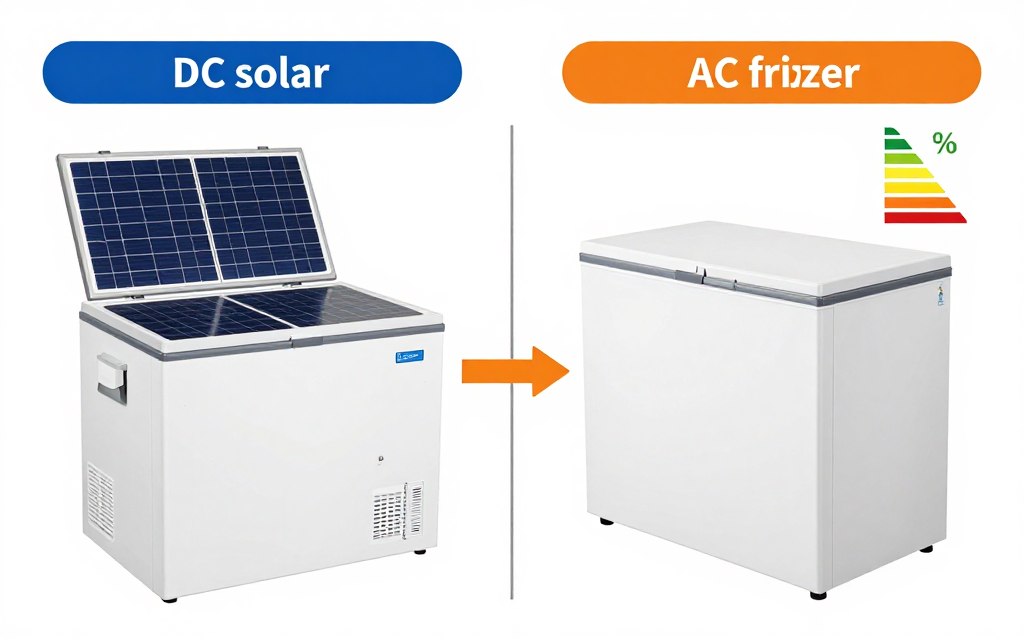
Standard chest freezers require AC power from your home’s electrical system. When the grid fails, you need a generator or inverter to convert DC battery power back to AC. This conversion wastes energy and adds complexity.
Solar chest freezers run on DC power, the same type produced by solar panels and stored in batteries. This direct connection eliminates conversion losses and makes your emergency power system simpler and more efficient.
Direct DC Power Advantage
A 12V or 24V DC chest freezer connects straight to a portable power station or battery bank. No inverter needed. This direct connection means:
- Up to 15% more runtime from the same battery capacity
- Fewer components that can fail during an emergency
- Lower total system cost without inverter requirements
- Ability to run from your vehicle’s 12V outlet as backup
Energy Efficiency in Hot Climates
Gulf Coast summers push temperatures above 95°F regularly. Standard freezers work harder in this heat. Quality solar chest freezers use advanced compressor technology designed for harsh conditions.
Modern DC chest freezers consume just 45-60 watts while running. Compare that to a standard AC chest freezer pulling 100-150 watts. Over a three-day power outage, this difference means the solar model runs twice as long on the same battery.
Standard AC Chest Freezer
- Requires inverter for battery power
- 100-150 watt power consumption
- Energy lost in AC/DC conversion
- Cannot run from vehicle power
- More expensive emergency power setup
DC Solar Chest Freezer
- Runs directly from battery or solar
- 45-60 watt power consumption
- No conversion energy loss
- Works with vehicle 12V outlet
- Simple, affordable power system
Reliability When It Matters Most
Hurricane preparation starts weeks before a storm approaches. A solar chest freezer lets you stock up on frozen items early, knowing your system will keep running even if power goes out for extended periods.
The chest design itself provides superior insulation compared to upright models. Cold air stays inside when you open the lid, unlike upright freezers where cold air spills out. During a power outage, this design keeps items frozen longer.
Critical Medication Storage: Why This Matters for Diabetics
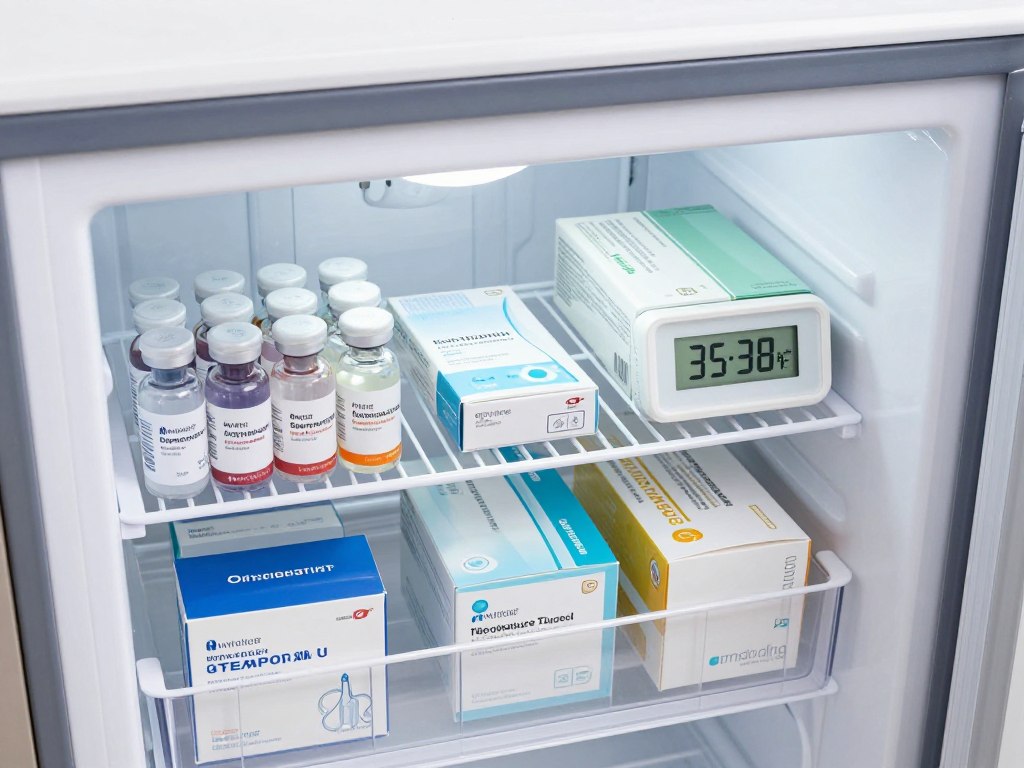
Insulin loses effectiveness when exposed to temperatures above 86°F. In a Florida summer without air conditioning, indoor temperatures can exceed 95°F within hours of losing power. This creates a dangerous situation for diabetics who depend on properly stored insulin.
A solar chest freezer provides reliable temperature control independent of the grid. Set to refrigerator temperatures (35-40°F), these units maintain safe storage conditions for insulin and other medications throughout extended outages.
Temperature-Sensitive Medications That Need Protection
Beyond insulin, many common medications require refrigeration. These include:
- Insulin and other injectable diabetes medications
- Certain antibiotics and liquid medications
- EpiPens and emergency allergy medications
- Some chemotherapy drugs for home administration
- Biologic medications for autoimmune conditions
- Vaccines and immunoglobulin products
Replacing spoiled medications during or after a hurricane can be impossible. Pharmacies often close or lose power themselves. Insurance companies may not cover emergency replacements. Having reliable refrigeration protects both health and finances.
Don’t Risk Your Medication Supply
Insulin can spoil in as little as 2 hours without proper refrigeration during Gulf Coast heat. A solar chest freezer provides reliable, independent cooling when the grid goes down. Protect what matters most.
How to Organize Medication in Your Solar Freezer
Dedicated medication storage requires organization. Keep medicines separate from food items using sealed containers. Use a small basket or bin to group medications together for easy access.
Place a separate thermometer inside to monitor temperature. Many solar chest freezers include digital displays, but a backup thermometer provides peace of mind. Keep medications toward the top where you can reach them quickly without letting cold air escape.
Label everything clearly with dates and contents. During a stressful evacuation or power outage, clear organization helps caregivers and family members find what they need fast.
How to Size a Solar Chest Freezer for Your Needs
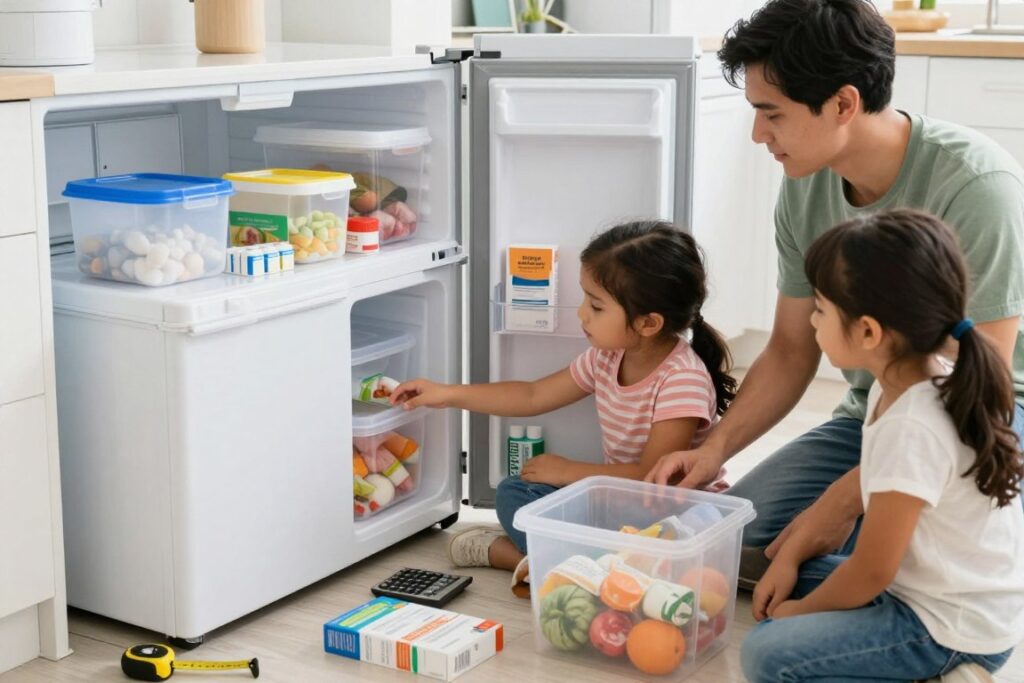
Choosing the right size solar chest freezer depends on your household size, storage needs, and available space. Too small means inadequate capacity during emergencies. Too large wastes power and money.
Capacity Guidelines by Household Size
Storage capacity is measured in quarts or liters. One cubic foot equals approximately 28 quarts. Use these guidelines as starting points:
| Household Size | Recommended Capacity | Storage Duration | Typical Use Case |
| 1-2 people | 30-45 quarts | 3-5 days | Medication + essential food |
| 3-4 people | 53-63 quarts | 5-7 days | Family food storage |
| 5+ people | 75-95 quarts | 7-10 days | Large families, extended storage |
| Medication only | 20-30 quarts | As needed | Diabetics, medical needs |
Power Consumption vs. Capacity
Larger chest freezers consume more power. A 95-quart model might draw 55-60 watts while running, compared to 45 watts for a 45-quart unit. This difference affects your solar panel and battery requirements.
Consider duty cycle as well. Chest freezers don’t run continuously. They cycle on and off to maintain temperature. In typical conditions, expect the compressor to run about 30-40% of the time. This means a 50-watt freezer uses approximately 360-480 watt-hours per day.
Space Considerations
Measure your available space before choosing a size. Chest freezers need clearance on all sides for ventilation. Plan for:
- At least 3 inches of clearance on sides and back
- Floor space for the unit plus opening the lid fully
- Accessibility during an emergency when space may be tight
- Proximity to your portable power station or battery system
Sizing Tip: For Gulf Coast hurricane season, size your chest freezer for at least 5-7 days of storage. Most extended power outages after hurricanes last 3-5 days, but some areas experienced two weeks without power after recent major storms.
Calculate Your Actual Storage Needs
Walk through your current freezer and identify hurricane essentials. Count packages of meat, frozen vegetables, prepared meals, and ice packs. Add space for medications if needed. This practical approach reveals your true storage requirements better than estimates.
Remember that chest freezers hold more than their capacity might suggest. The top-loading design and absence of shelves means efficient packing. A 53-quart model can hold approximately 40-50 pounds of frozen food when organized properly.
Ready to Choose Your Size?
Now that you understand sizing requirements, explore our top-tested solar chest freezer models specifically selected for Gulf Coast hurricane preparation.
Top Solar Chest Freezer Recommendations for Hurricane Season
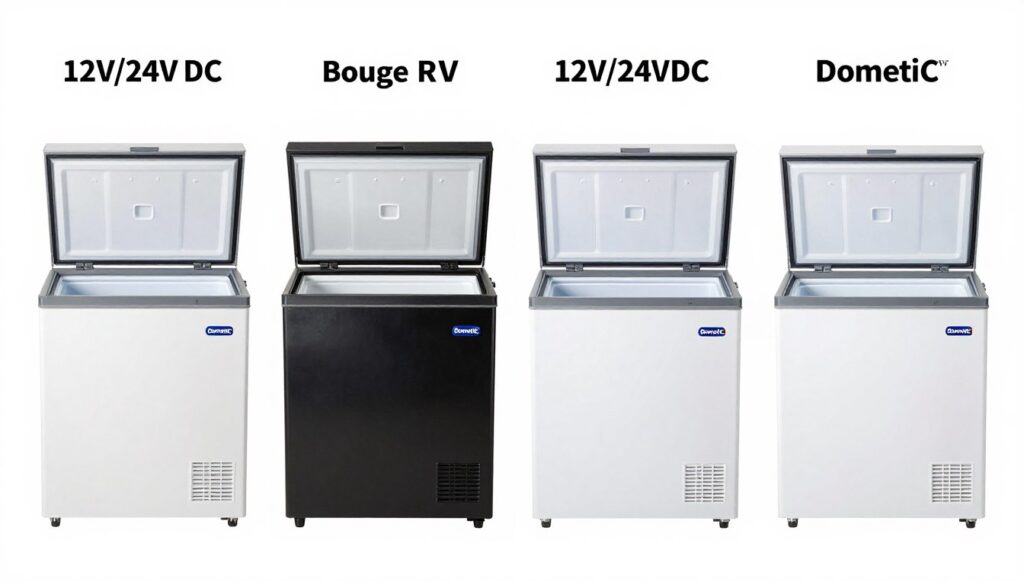
We tested and evaluated the top DC chest freezer models available to Gulf Coast residents. These recommendations balance performance, reliability, price, and availability. All models run on 12V or 24V DC power and work with solar power stations.
Our Testing Criteria
Each freezer was evaluated for:
- Temperature maintenance during simulated power outages
- Energy consumption in Florida summer conditions
- Build quality and durability for long-term emergency use
- Ease of connection to portable power stations
- Availability and price for Gulf Coast buyers
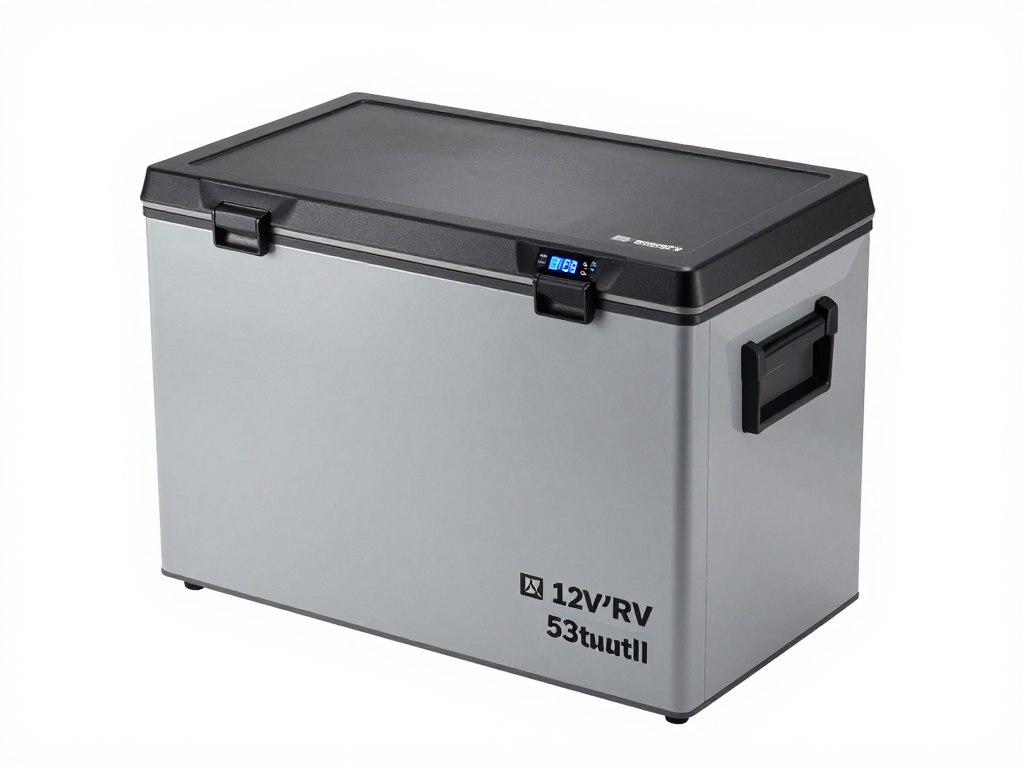
BougeRV 12V Portable Refrigerator 53 Quart
Capacity: 53 Quarts (50 Liters) | Power: 12V/24V DC | Consumption: 45-50W
The BougeRV 53-quart model offers the best balance of capacity, efficiency, and price for most Gulf Coast families. This chest freezer runs on true 12V/24V DC power without any inverter, making it perfect for solar power stations.
Temperature range spans from -7°F to 50°F, allowing use as either a freezer or refrigerator. The digital display shows current temperature and lets you adjust settings easily. Three-stage battery protection prevents draining your power station too low.
Key Features:
- Dual zone cooling with independent temperature controls
- Rapid cooling reaches 32°F in just 15 minutes
- Works with 100W-200W solar panel systems
- Includes both AC and DC power adapters
- Removable basket for organization
Pros
- Excellent energy efficiency saves battery power
- Perfect size for 3-4 person households
- Quiet operation under 40 decibels
- Well-insulated for extended power outages
- Affordable price point under $400
Cons
- Heavy at 35 pounds (not easily portable)
- Lid seal requires occasional adjustment
- No built-in battery (requires external power source)
Best For: Families with 3-4 people needing reliable food and medication storage during hurricane outages. Ideal for pairing with a 1000Wh portable power station.
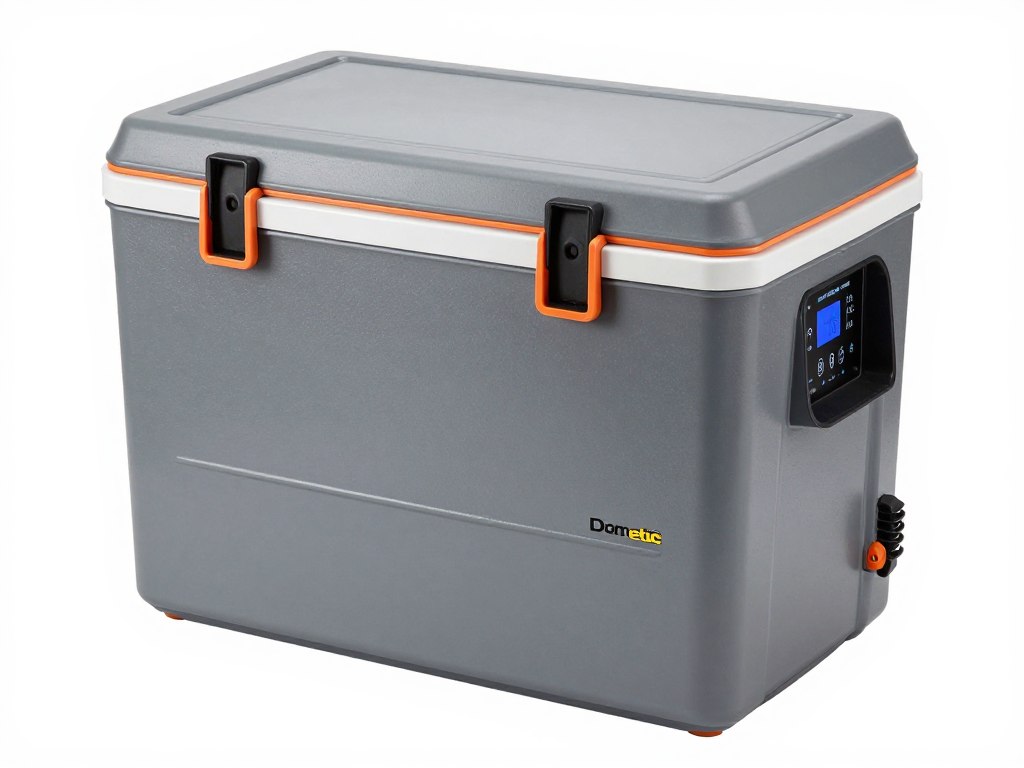
Dometic CFX3 45 Portable Compressor Cooler
Capacity: 45 Quarts (42.5 Liters) | Power: 12V/24V DC | Consumption: 50W
Dometic brings decades of refrigeration expertise to this premium portable freezer. The CFX3 45 represents their latest technology with app-based controls and exceptional build quality. This model costs more but delivers professional-grade performance.
The variable-speed compressor adjusts power consumption based on conditions. In hot Florida weather, it works harder. On cooler nights, it throttles back to save battery. This smart operation extends runtime significantly.
Key Features:
- WiFi and Bluetooth app control for monitoring
- USB port for charging devices
- Extra-thick insulation maintains temperature longer
- Reinforced corners and heavy-duty hinges
- 3-year manufacturer warranty
Pros
- Superior build quality lasts for years
- App control lets you monitor remotely
- Variable compressor optimizes energy use
- Excellent customer support and warranty
- Can cool down to -7°F reliably
Cons
- Higher price point around $800
- Smaller capacity than budget options
- App requires internet for remote monitoring
Best For: Buyers who prioritize quality and reliability over price. Excellent for medication storage where failure is not an option. Ideal for 1-3 person households or dedicated medical storage.
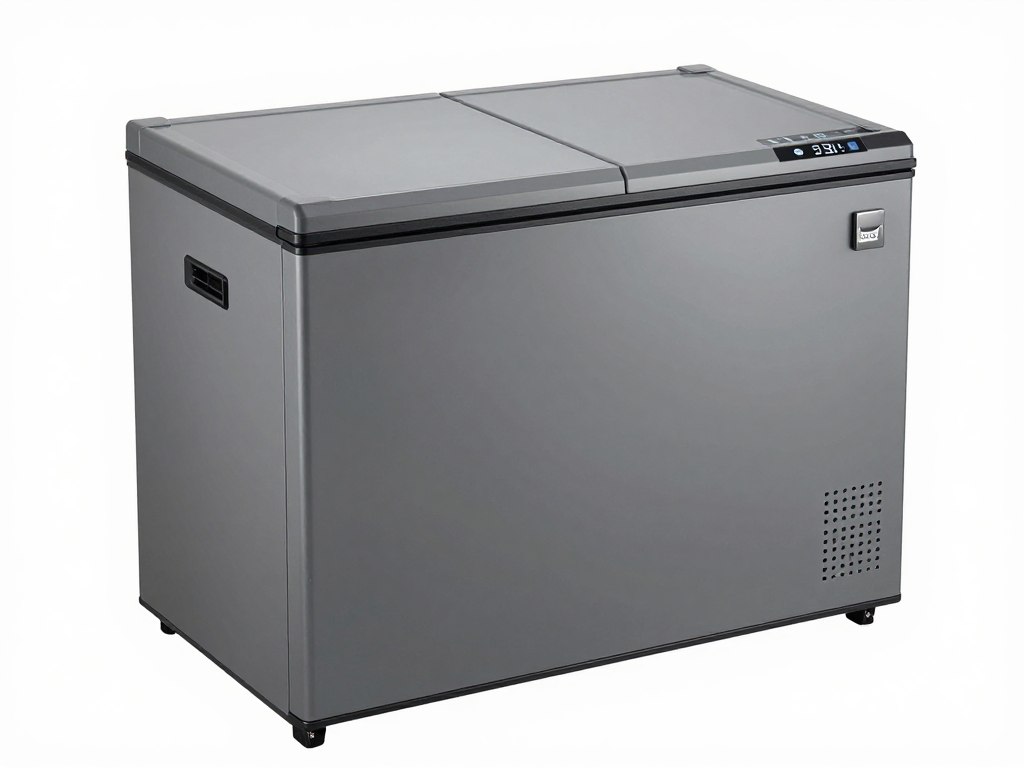
BougeRV 12V Refrigerator 73 Quart
Capacity: 73 Quarts (69 Liters) | Power: 12V/24V DC | Consumption: 60W
Large families and those planning for extended outages need the extra capacity of this 73-quart model. BougeRV scaled up their proven design while maintaining energy efficiency. This chest freezer holds enough food for 5-7 people through a week-long power outage.
The dual-zone design divides the interior into two compartments. Run one side as a freezer for long-term food storage while keeping the other side at refrigerator temperatures for daily use items and medications.
Key Features:
- Separate controls for each compartment
- Large capacity fits 90+ cans or substantial food storage
- LED interior lighting for night access
- Drain plug for easy cleaning
- Sturdy handles for two-person moving
Pros
- Generous capacity for large families
- Dual zone flexibility for different temperatures
- Still efficient despite larger size
- Good price for the capacity provided
- Handles hold up to frequent access
Cons
- Requires larger power station (1500Wh minimum)
- Takes up more floor space
- Heavier at 48 pounds
- Higher power consumption than smaller models
Best For: Large families, extended hurricane evacuations, or those combining food and medication storage in one unit. Works well with larger solar generator systems.
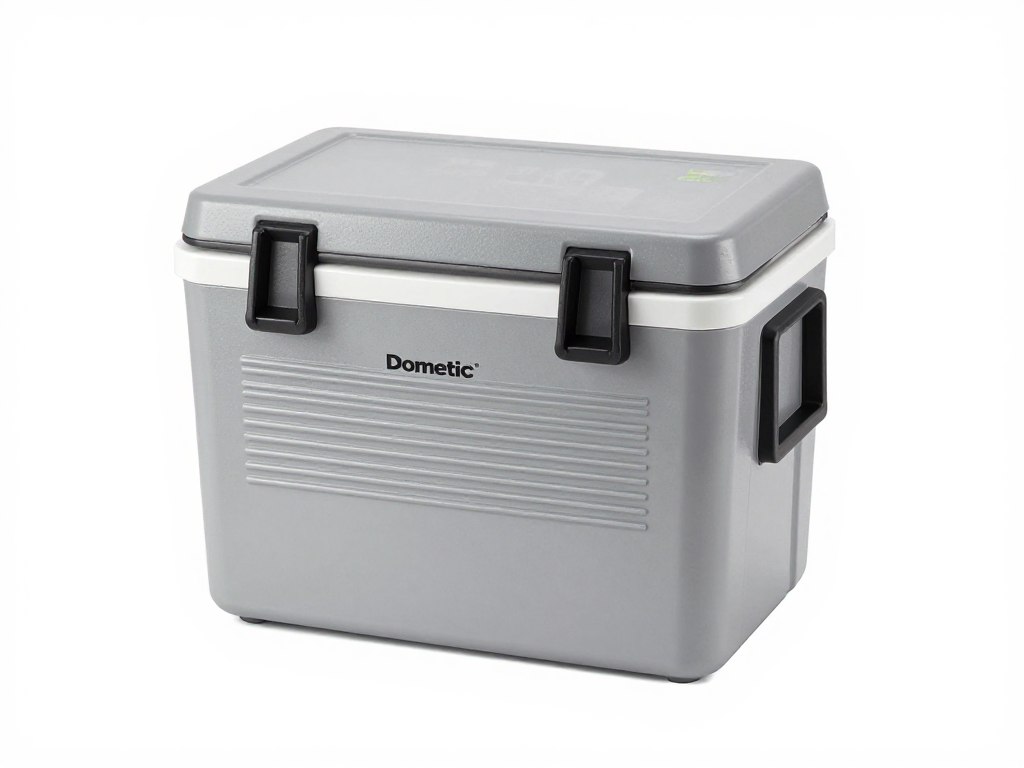
Dometic CFF 35 Portable Electric Cooler
Capacity: 35 Quarts (33 Liters) | Power: 12V/24V DC | Consumption: 40W
The smallest model in our recommendations, the Dometic CFF 35 excels as a dedicated medication refrigerator or compact emergency food storage. Its low power consumption means longer runtime on smaller portable power stations.
This compact chest freezer fits in tight spaces like apartment balconies or small utility rooms. Despite the smaller size, it maintains reliable temperatures and features Dometic’s quality construction.
Key Features:
- Extremely energy efficient at only 40W
- Compact footprint for small spaces
- Simple, reliable mechanical controls
- Spring-assisted lid stays open
- Interior light for visibility
Pros
- Lowest power consumption of all models
- Ideal for medication-only storage
- Fits in small spaces easily
- Lighter weight for occasional moving
- Can run on smaller 500Wh power stations
Cons
- Limited capacity for large families
- Higher price per quart of capacity
- No digital display or advanced features
- Smaller opening makes organization harder
Best For: Diabetics and individuals needing dedicated medication storage. Also suitable for singles, couples, or as a secondary freezer for emergency supplies.
Stock Alert: Solar chest freezer demand spikes 300-400% in the weeks before hurricane landfalls. Order early in the season (April-May) for best availability and pricing.
Pairing Your Solar Chest Freezer with a Portable Power Station
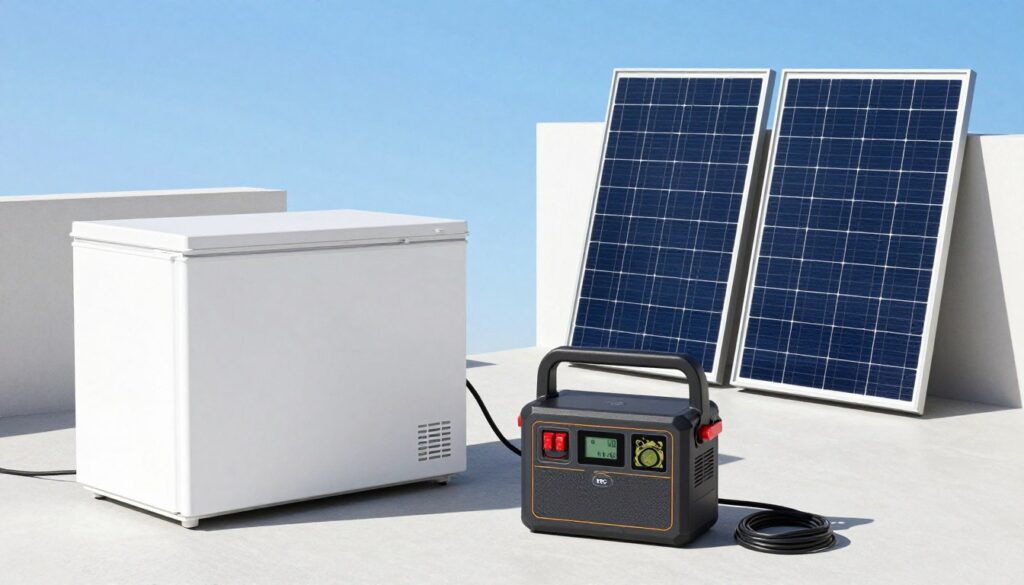
A solar chest freezer needs power to run. While these units are efficient, they still require a reliable energy source during outages. Portable power stations provide that source, storing energy from solar panels for use day and night.
Understanding Power Station Requirements
Your chest freezer’s power consumption determines what size power station you need. Most models draw 45-60 watts while the compressor runs. Calculate daily consumption using this formula:
Daily Power Use = Wattage × Runtime Hours
A 50-watt freezer running 8-10 hours per day (accounting for duty cycle) consumes 400-500 watt-hours (Wh) daily. To run for three days without recharging, you need at least 1,200-1,500Wh of battery capacity.
Recommended Power Station Capacities
| Freezer Size | Daily Consumption | Minimum Power Station | Recommended Capacity |
| 35-45 quarts | 350-450 Wh/day | 1,000 Wh | 1,500 Wh |
| 50-63 quarts | 400-500 Wh/day | 1,500 Wh | 2,000 Wh |
| 73+ quarts | 500-650 Wh/day | 2,000 Wh | 3,000 Wh |
These capacities assume you’re only powering the freezer. If you plan to run other devices from the same power station, increase capacity accordingly.
Solar Panel Sizing for Recharging
Solar panels recharge your power station during daylight hours. Gulf Coast locations receive excellent sun exposure, making solar charging practical even during cloudy conditions.
Match solar panel wattage to your daily consumption. For a chest freezer using 450Wh daily, a 200W solar panel provides adequate recharging in 4-5 hours of good sunlight. This accounts for charging efficiency losses and variable sun conditions.
- 100W panel: Suitable for 35-45 quart freezers with backup power
- 200W panel: Ideal for 50-63 quart freezers for full independence
- 400W panel: Recommended for 73+ quart freezers or running additional devices
Complete Your Hurricane Power System
Your solar chest freezer is just one part of hurricane preparedness. Learn how to choose the right portable power station and solar panel setup to keep your entire home essential systems running.
Connecting Your Freezer to the Power Station
Most solar chest freezers come with a DC power cable that plugs directly into your portable power station’s 12V outlet. This connection is simple and requires no special tools or adapters.
Check that your power station has a 12V DC outlet (also called a car port or cigarette lighter outlet). Nearly all models designed for emergency use include this feature. Some power stations offer both 12V and USB-C PD outputs that can power DC freezers.
Run the cable neatly and avoid sharp bends. Keep connections accessible so you can quickly unplug if you need to move either device during an emergency.
Battery Management During Outages
Stretch your power station’s runtime by managing when the freezer operates. During cooler nighttime temperatures, the chest freezer may not need to run as frequently. Modern DC freezers have excellent insulation that maintains temperature for hours without power.
Monitor your power station’s battery level through its display. When capacity drops below 30%, consider whether you can supplement with solar charging or need to reduce usage. Most quality power stations include low battery protection to prevent damage.
Running Your Freezer from Your Vehicle’s 12V Outlet
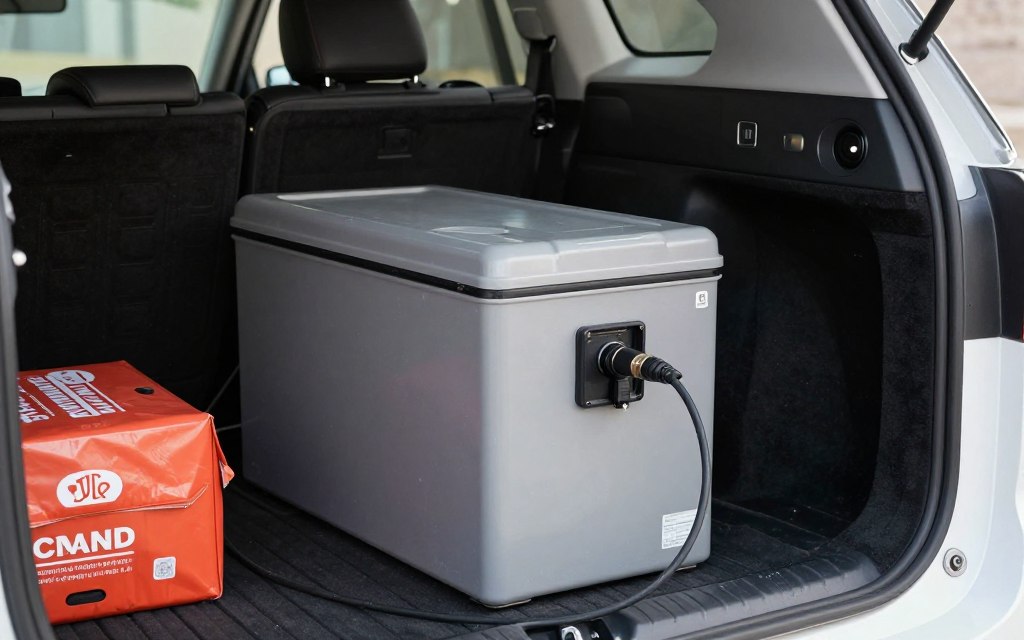
Every solar chest freezer in our recommendations can run directly from a vehicle’s 12V outlet. This provides crucial backup power if your portable power station runs low or you need to evacuate quickly.
How Long Will Your Vehicle Power the Freezer?
A typical car battery holds about 400-600 watt-hours of usable capacity. Running a 50-watt chest freezer directly from your vehicle’s battery will drain it in approximately 6-8 hours of continuous compressor operation.
However, most people run the freezer while driving or with the engine idling. Your vehicle’s alternator produces far more power than the freezer consumes, making this a sustainable option for short-term use or during evacuation travel.
Important Safety Note: Running appliances from a parked vehicle’s 12V outlet (with engine off) will drain the battery. Always start your engine periodically to recharge, or risk being unable to start the vehicle. Never run this setup in an enclosed garage with the engine running due to carbon monoxide danger.
Evacuation Scenarios
During a mandatory evacuation, your chest freezer becomes portable refrigeration. Pack it with essential frozen items and medications, connect it to your vehicle’s power outlet, and keep critical items cold during the drive to safety.
The chest design prevents spills during transport. Make sure the lid closes securely and the freezer sits level in your vehicle. Many owners place the unit in the cargo area of SUVs or in backseats with seatbelts securing it.
Tips for Vehicle-Powered Operation
- Test your setup before an emergency to ensure your cable reaches from the outlet to your planned placement location
- Keep the engine running every 2-3 hours if parked to maintain battery charge
- Park in shade when possible to reduce the freezer’s workload
- Check that your vehicle’s 12V outlet can handle continuous draw (most modern vehicles can)
- Bring a spare DC power cable in case of damage
Protecting Your Vehicle’s Electrical System
Modern vehicles have robust electrical systems, but taking precautions prevents problems. Check your owner’s manual for the maximum power draw from 12V outlets. Most support 10-15 amps, which is more than sufficient for a chest freezer drawing 4-5 amps.
Use the cable that came with your freezer or a quality replacement rated for automotive use. Cheap cables can overheat and pose fire risks. Inspect connections regularly and replace any cable showing wear or damage.
Total Solar Chest Freezer System Cost Breakdown
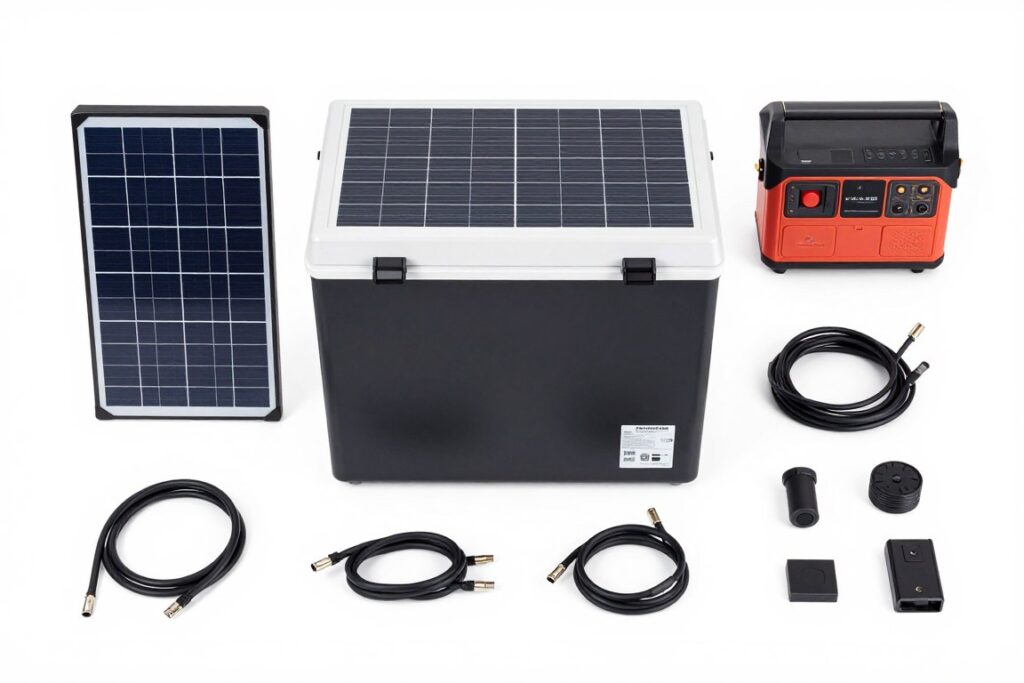
Understanding the full system cost helps with hurricane preparedness budgeting. A complete solar chest freezer setup includes the freezer itself, a portable power station, solar panels, and connection cables.
Basic System Cost (Small Household)
For a 1-3 person household with medication and essential food storage needs:
| Component | Recommended Model | Estimated Cost |
| Solar Chest Freezer | BougeRV 53 Quart or Dometic CFF 35 | $350-$600 |
| Portable Power Station | 1,000-1,500Wh capacity unit | $600-$1,000 |
| Solar Panel | 100-200W foldable or rigid panel | $150-$350 |
| Cables and Accessories | DC extension cables, adapters | $30-$60 |
| Total System Cost | $1,130-$2,010 |
Mid-Size System Cost (Family of 4-5)
For families needing more capacity and longer runtime:
| Component | Recommended Model | Estimated Cost |
| Solar Chest Freezer | BougeRV 73 Quart | $500-$650 |
| Portable Power Station | 2,000Wh capacity unit | $1,200-$1,800 |
| Solar Panel | 200W panel (or two 100W panels) | $250-$500 |
| Cables and Accessories | DC cables, panel stands, extension cords | $50-$100 |
| Total System Cost | $2,000-$3,050 |
Premium System Cost (Large Family/Extended Coverage)
For maximum capacity and the longest possible runtime:
| Component | Recommended Model | Estimated Cost |
| Solar Chest Freezer | Dometic CFX3 75 or similar premium | $900-$1,200 |
| Portable Power Station | 3,000Wh+ capacity expandable unit | $2,000-$3,000 |
| Solar Panel Array | 400W (two 200W panels) | $400-$700 |
| Cables and Accessories | Premium cables, connectors, mounting hardware | $100-$150 |
| Total System Cost | $3,400-$5,050 |
Cost Comparison: Solar System vs. Alternatives
Compare the solar chest freezer system to other hurricane power solutions:
- Gas Generator ($500-$1,000) + Standard Freezer ($300-$600): Lower initial cost but requires fuel storage, creates noise, needs outdoor operation, and fuel becomes expensive over time
- Hotel Evacuation (7 days at $150/night): $1,050 per event with no reusable equipment
- Replacing Spoiled Food and Medications: $300-$800 per outage with potential health risks
- Solar System: One-time investment provides reliable power for 10+ years with minimal maintenance costs
Invest in Hurricane Preparedness
A complete solar chest freezer system costs less than one week of hotel evacuation. Protect your family’s food and medication supply with reliable, fuel-free backup power that works year after year.
Financing and Budget Options
Many retailers offer financing for emergency preparedness equipment. Amazon, for example, provides payment plans through their credit card program. Spreading the cost over several months makes the investment more manageable.
Consider building your system in stages if budget is a concern. Start with the chest freezer and a smaller power station, then upgrade to larger capacity and add solar panels as finances allow. Even a partial system provides more protection than no preparation.
Frequently Asked Questions About Solar Chest Freezers for Hurricane Season
What is the best solar chest freezer for hurricane season?
The BougeRV 12V Portable Refrigerator 53 Quart offers the best balance of capacity, efficiency, and value for most Gulf Coast families. It provides adequate space for 3-4 people, runs efficiently on minimal power, and pairs well with mid-sized portable power stations. For those prioritizing maximum reliability and build quality, the Dometic CFX3 45 represents a premium option with app controls and superior construction.
How long will a 12V chest freezer run during a hurricane power outage?
Runtime depends on your power station capacity and solar charging availability. A 53-quart chest freezer consuming 400-500Wh daily can run for 3-4 days on a 2,000Wh power station without recharging. With a 200W solar panel providing 4-5 hours of daily charging, the system can run indefinitely. During cloudy hurricane conditions, expect solar panels to still generate 30-50% of rated capacity, extending runtime significantly compared to battery-only operation.
Can I keep insulin in a solar chest freezer during a hurricane?
Yes, solar chest freezers are excellent for storing insulin and other temperature-sensitive medications during hurricanes. Set the temperature to 36-46°F (refrigerator range, not frozen). DC chest freezers maintain consistent temperatures and many include alarms if temperature rises above safe levels. The reliable DC power operation and solar charging capability make these units ideal for medication storage when grid power fails. The Dometic CFX3 45 compact model works particularly well as a dedicated medication refrigerator.
How do I keep food cold during a hurricane in Florida?
The most reliable method is a solar-powered chest freezer connected to a portable power station with solar panels. This system provides consistent cooling independent of the power grid. Chest freezers maintain cold temperatures better than upright models because cold air doesn’t spill out when opened. For maximum effectiveness, pre-cool your freezer, pack it efficiently, minimize door openings, and ensure your solar panels receive adequate sunlight for daily recharging. A properly sized system keeps food frozen or refrigerated for the entire duration of typical hurricane power outages.
What size portable power station do I need for a solar chest freezer?
Match your power station capacity to your freezer size and desired runtime. For a 50-quart freezer using 450Wh daily, choose at least a 1,500Wh power station for three days of runtime without solar charging. Larger families using 73-quart freezers need 2,000-3,000Wh capacity. Always size up rather than down to account for efficiency losses and provide buffer capacity. The power station should also have adequate DC outlets and support solar panel charging for system sustainability.
Is it better to use a solar chest freezer or a generator for hurricane preparedness?
Solar chest freezer systems offer significant advantages over generators for long-term food storage during hurricanes. They operate silently, require no fuel that can become unavailable before storms, work indoors safely, and need minimal maintenance. Generators cost less initially but require ongoing fuel expenses, must run outdoors, create noise that disturbs neighbors, and need regular maintenance. For dedicated food and medication storage, solar chest freezers with portable power stations provide more reliable, convenient, and cost-effective solutions over their 10+ year lifespan.
Can I run a chest freezer from my car during an evacuation?
Yes, all the DC chest freezers we recommend run directly from your vehicle’s 12V outlet (cigarette lighter port). This capability is invaluable during evacuations, allowing you to transport frozen food and medications while keeping them cold. Your vehicle’s alternator produces more than enough power while driving. When parked, run the engine periodically to prevent battery drain. This flexibility makes solar chest freezers far superior to standard AC freezers for hurricane evacuations.
What’s the difference between a DC chest freezer and a regular chest freezer?
DC chest freezers run on 12V or 24V direct current, the same power type batteries and solar panels produce. Regular chest freezers require 120V AC power from wall outlets. For hurricane preparedness, DC models are superior because they connect directly to portable power stations and solar panels without inverters, maximizing efficiency. They also work with vehicle 12V outlets. DC freezers typically consume 45-60 watts compared to 100-150 watts for equivalent AC models, making them ideal for off-grid and emergency use.
How many solar panels do I need to run a chest freezer?
A 200W solar panel typically provides sufficient power for a standard 50-60 quart chest freezer in Gulf Coast conditions. This panel generates 800-1,000Wh on sunny days (4-5 hours of optimal sun), exceeding the freezer’s daily 400-500Wh consumption. For larger freezers or those wanting faster charging, 400W panel arrays work better. During hurricane season’s cloudier conditions, oversizing your solar panel capacity by 50-100% ensures adequate charging even when weather is less than ideal.
When should I buy a solar chest freezer for hurricane season?
Purchase your solar chest freezer system in April or May, before peak hurricane season begins in August-October. Prices increase and stock depletes as storms approach. Many models sell out completely 48-72 hours before hurricanes make landfall. Early purchase also gives you time to test your system, optimize placement, and ensure all components work properly together before you actually need them in an emergency. Don’t wait until a storm is forming to prepare.
Don’t Wait Until the Next Storm — Prepare Your Hurricane Power System Today
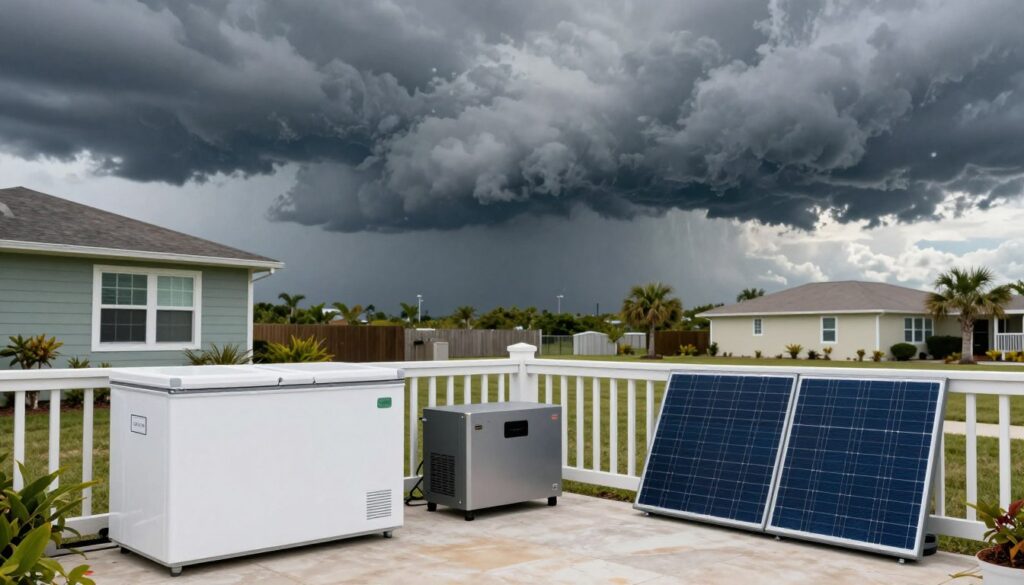
Hurricane season arrives every year along the Gulf Coast. Power outages lasting days or weeks become reality for thousands of families. The time to prepare isn’t when a storm appears on the forecast. It’s now, while equipment is available and you can make informed decisions without pressure.
Every hurricane season brings the same pattern. Supplies sell out as storms approach. Generators disappear from shelves. Fuel becomes scarce. Hotels fill completely. Families scramble to protect food and medications, often unsuccessfully.
The Cost of Waiting
Unprepared families face harsh realities during extended outages:
- $300-$800 in spoiled food and medications lost per outage
- $1,000-$2,000 for week-long hotel evacuations
- Health risks from spoiled insulin and temperature-sensitive medications
- Stress and anxiety from inadequate emergency preparations
- Limited options when shopping during hurricane warnings
A solar chest freezer system costs less than a single hotel evacuation. The difference is that your system works year after year, providing reliable cold storage every time the grid fails.
Why Solar Beats Other Options
Compared to generators, solar chest freezer systems offer clear advantages for food and medication storage. No fuel required means no supply concerns before storms. Silent operation means no noise complaints from neighbors during extended outages. Indoor operation means better security and convenience.
The fuel-free operation particularly matters along the Gulf Coast. Gas stations run out of fuel before major hurricanes. Even if you stockpile gasoline, it requires careful storage and degrades over time. Solar panels produce power for decades with virtually no maintenance.
Hurricane Season Is Active Now
Don’t wait for the next storm to appear on the radar. These solar chest freezer models typically sell out in days when hurricane forecasts emerge. Delivery times extend from next-day to weeks. Installation and testing your system takes time.
Early preparation provides peace of mind. Your system sits ready. Your family stays protected. When neighbors scramble for last-minute supplies, you’re already prepared.
Protect Your Family Before the Next Hurricane
Stock depletes fast when storms approach the Gulf Coast. Order your solar chest freezer system now while all models remain available. Don’t risk losing medications and food during the next extended power outage.
Start with the Right Equipment
Building an effective hurricane preparedness system starts with reliable equipment. The solar chest freezers we’ve recommended represent the best options currently available for Gulf Coast residents. They combine proven performance, appropriate capacity, and efficient DC power operation.
Pair your chosen chest freezer with an appropriately sized portable power station and solar panels. This complete system provides the foundation for riding out extended power outages safely at home.
Beyond Food Storage
A solar chest freezer solves the critical challenge of keeping food and medications cold. But comprehensive hurricane preparedness includes additional power needs. Lighting, communication devices, medical equipment, and fans all require power during outages.
Your portable power station serves dual purposes. It runs your chest freezer while also providing power for other essential devices. This flexibility makes the investment even more valuable for overall hurricane preparedness.
The Peace of Mind Factor
Beyond dollars and logistics, proper preparation provides something more valuable: peace of mind. Knowing your family’s medications stay safe. Knowing you won’t lose hundreds of dollars in frozen food. Knowing you can ride out the storm at home rather than evacuating.
That peace of mind is worth the investment. For families with diabetics or anyone requiring refrigerated medications, it’s essential. Don’t wait until you’re facing an approaching hurricane to realize you needed this preparation.
Order your solar chest freezer system today. Test it thoroughly. Stock it with your hurricane supplies. When the next storm threatens the Gulf Coast, you’ll be ready.