Hurricane season starts June first. That gives coastal families precious weeks to prepare before storms form in the Atlantic.
Last season showed us something important. Families who prepared early avoided empty store shelves and long gas lines when storms approached.
This 2026 hurricane preparedness checklist gives you everything needed to protect your home and family. We cover power backup, water supplies, communication tools, food storage, and home protection—organized by priority.
NOAA forecasts another active hurricane season for 2026. Families across Florida, Georgia, South Carolina, North Carolina, Alabama, Mississippi, Louisiana, and Texas need to prepare now before the first named storm forms.
Affiliate Disclosure: Coastal Guardians is a participant in the Amazon Services LLC Associates Program. As an Amazon Associate we earn from qualifying purchases at no additional cost to you. We recommend products based on Gulf Coast experience and real-world hurricane season testing.
The 5-Level Hurricane Preparedness Framework
Hurricane preparedness breaks down into five essential categories. Each one protects your family in different ways during storms and power outages.
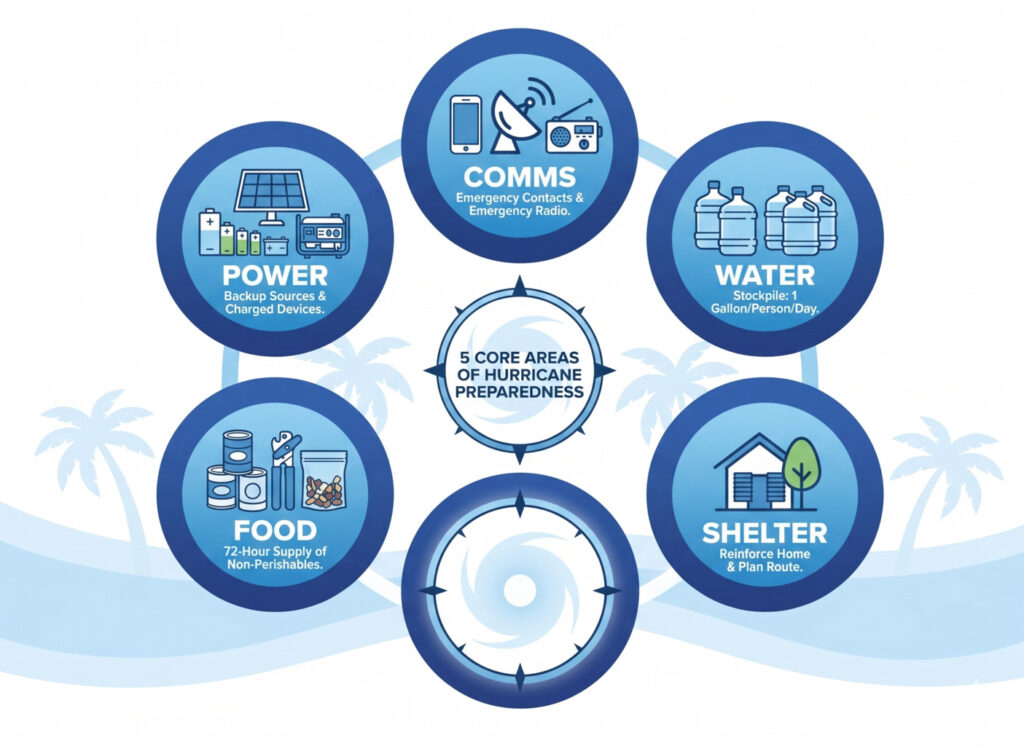
This framework helps you organize your hurricane prep checklist by priority. Start with power and water since these affect survival immediately during extended outages.
Power Systems
Electricity runs critical devices like medical equipment, refrigeration, and communication tools. Power backup is your first line of defense.
- Portable power stations for essential devices
- Solar panels for recharging during outages
- Battery backups for medical equipment
- Whole-home generators for complete coverage
Water
Clean drinking water becomes scarce when utilities fail. Store at least one gallon per person per day for seven days minimum.
- Water storage containers and barrels
- Emergency water filtration systems
- Purification tablets as backup
- WaterBOB for bathtub storage
Communication
Cell towers fail during hurricanes. Alternative communication methods keep you connected to emergency information and loved ones.
- NOAA weather radio with alerts
- Satellite communicators for messages
- Battery-powered phone chargers
- Family communication plan with contacts
Food and Shelter
Stock non-perishable food for two weeks. Protect your home from wind damage and flooding before the storm arrives.
- Two-week supply of shelf-stable food
- Manual can opener and cooking fuel
- Storm shutters or plywood for windows
- Tarps and sandbags for protection
The fifth level covers documents and finances. Keep insurance policies, identification, and cash in waterproof containers. These items help you recover faster after the storm passes.
Power Backup — Your Hurricane Preparedness Priority
Power outages last days or weeks after major hurricanes hit the Gulf Coast. Your refrigerated medication spoils. Medical devices stop working. Communication with the outside world becomes difficult.
A reliable backup power system keeps your family safe during extended outages. The right solution depends on your specific needs and budget.
Portable Power Stations
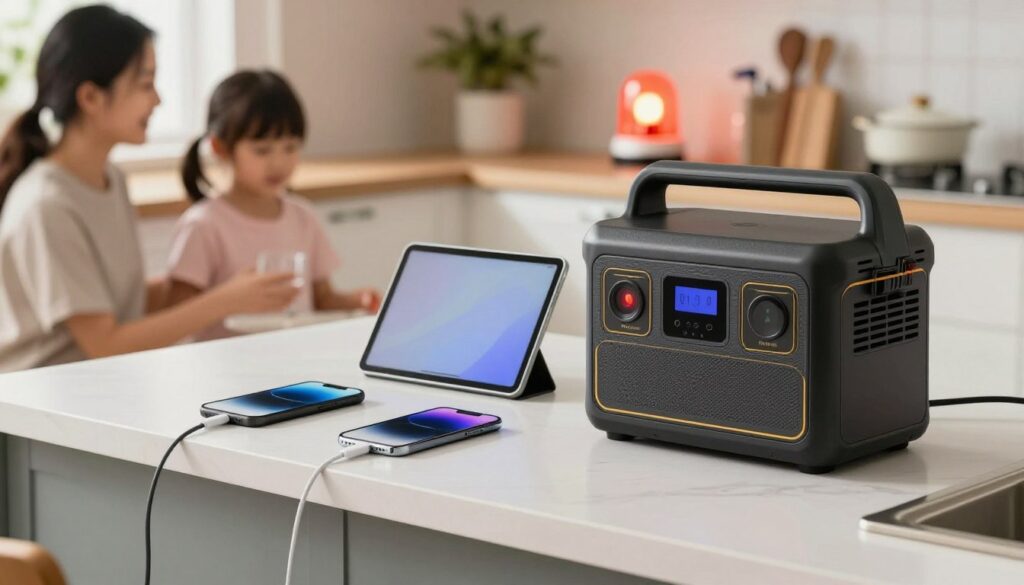
Portable power stations replaced traditional gas generators for many Gulf Coast families. These battery systems run silently indoors, need no fuel, and start instantly when power fails.
Choose capacity based on what you need to run. A 1000Wh unit powers essential devices for several hours. Larger 2000Wh or 3000Wh stations keep refrigerators running and charge multiple devices for days.
Solar panels pair with power stations for unlimited runtime. When grid power stays down for a week, solar recharging becomes essential for sustained power access.
Find Your Ideal Power Station
Our comprehensive guide compares capacity, runtime, and real-world performance. We tested every major brand during actual power outages to find what works.
EcoFlow, Jackery, and Anker — Which Brand Works Best?
Three brands dominate the portable power market. Each offers different advantages for hurricane preparedness.
EcoFlow Delta series provides the fastest charging and highest surge capacity. Jackery Explorer models balance performance with affordability. Anker emphasizes durability and customer support.
Your choice depends on budget, required capacity, and specific devices you need to power. For detailed brand comparison including pros, cons, and Gulf Coast user experiences, see our EcoFlow vs Jackery vs Anker comparison guide.
CPAP Users Need Specialized Backup
Sleep apnea patients face serious risks during power outages. Standard portable power stations work, but capacity calculations matter for uninterrupted sleep throughout multi-day outages.
CPAP machines draw between thirty and sixty watts depending on pressure settings and humidifier use. Calculate your nightly watt-hours, then multiply by seven days for safe backup capacity.
Battery packs specifically designed for CPAP use offer compact solutions for patients who evacuate. Our complete CPAP battery backup guide covers both home and evacuation scenarios with detailed runtime calculations.
Whole-Home Generator Options
Permanent standby generators automatically restore power to your entire home when the grid fails. Natural gas or propane-fueled systems start within seconds of detecting outages.
These systems cost significantly more than portable solutions. Installation requires professional electricians and gas line work. But for families with multiple medical devices or business operations at home, whole-home backup provides comprehensive protection.
Consider your long-term needs and hurricane risk level. Coastal homes face higher storm frequency than inland locations, making permanent generator installation more valuable over time.
Water Storage and Purification Systems
Municipal water systems fail during hurricanes. Flooding contaminates wells. Boil water notices last for days after storms pass.
Store one gallon of water per person per day as your baseline. A family of four needs twenty-eight gallons for a one-week outage. Double this amount if you have pets.
Water Storage Solutions
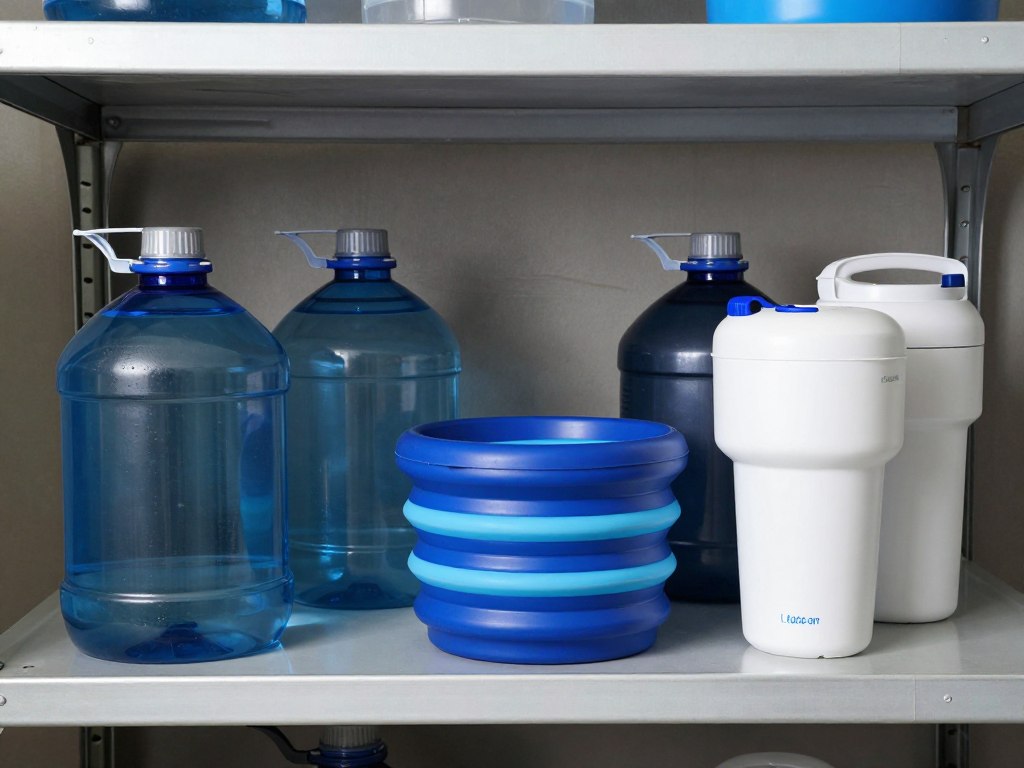
Store-bought bottled water offers the simplest solution. Stack cases in your garage or closet, rotating stock every six months to maintain freshness.
Five-gallon water jugs save money and storage space compared to individual bottles. Food-grade containers with spigots make daily use easier during outages.
The WaterBOB is a bathtub liner that holds one hundred gallons of fresh water. Fill it before the hurricane arrives, and you have drinking water for weeks. This solution works perfectly for apartment dwellers with limited storage space.
Water Filtration and Purification
Water filtration extends your supply when stored water runs low. Portable filters remove bacteria, parasites, and sediment from questionable water sources.
Gravity-fed filters like Berkey systems purify large quantities without electricity. Squeeze filters and straw-style purifiers offer portable backup for evacuation kits.
Purification tablets provide chemical treatment as a last resort. These tablets kill pathogens but do not remove sediment or improve taste.
Choose the Right Water Filter
Our water filtration guide compares filter types, purification methods, and capacity for Gulf Coast emergency use. Find the system that matches your family size and storage options.
Water Safety After the Storm
Never drink floodwater even after filtering. Contamination from sewage, chemicals, and debris makes floodwater unsafe regardless of treatment method.
Wait for official all-clear notices before using tap water again. Boil water for one minute if authorities issue boil notices. Let boiled water cool before drinking or storing.
Test well water after flooding events. County health departments often provide free testing after declared disasters. Do not assume your well is safe just because water looks clear.
Emergency Communication Systems
Cell networks collapse under hurricane conditions. Towers lose power. Infrastructure gets damaged. Your smartphone becomes useless without signal.
Multiple communication methods ensure you receive weather updates and can reach emergency contacts when primary systems fail.
NOAA Weather Radio
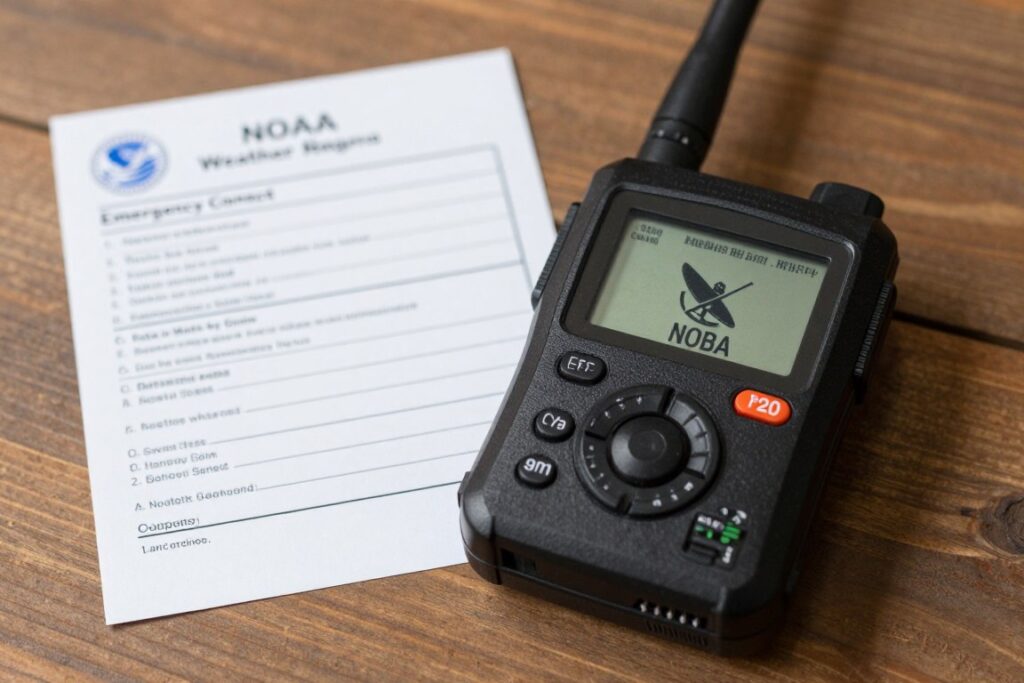
NOAA weather radios receive continuous broadcasts from the National Weather Service. These radios alert you to tornado warnings, storm surge updates, and evacuation orders even when internet and cell service fail.
Look for radios with multiple power options including battery, hand crank, and solar panel. SAME technology allows programming for your specific county, reducing false alerts from distant weather events.
The radio should run on standard AA or AAA batteries that you can stockpile. Hand-crank charging provides emergency backup when batteries die during extended outages.
See our complete guide to the best emergency weather radios with detailed reviews of top-rated models for Gulf Coast families.
Satellite Communicators
Satellite communicators send text messages when cell towers are down. These devices connect directly to satellites, bypassing ground infrastructure entirely.
Two-way messaging lets you check on family members and confirm your safety. GPS tracking shares your location with emergency contacts. SOS buttons alert rescue services if you need help.
Garmin inReach and ZOLEO devices lead this category. Both require monthly subscriptions, but plans suspend when not in use. For hurricane season June through November, you activate service just six months per year.
Stay Connected When Towers Fail
Our satellite communicator guide compares devices, subscription costs, and real-world performance during Gulf Coast hurricanes. Find the right device for your family communication plan.
Family Communication Plan
Create a written plan before hurricane season starts. Include phone numbers for all family members, out-of-state contacts, and local emergency services.
Designate one out-of-state relative as your family contact point. Local calls often fail while long-distance connections stay open during disasters. Everyone calls this person to report their status.
Keep printed copies of your communication plan in multiple locations. Store one copy in your vehicle, one in your emergency kit, and one in your wallet. Digital copies on your phone become useless when batteries die.
Practice your plan before storms threaten. Make sure children know the out-of-state contact number by heart. Test your satellite communicator to confirm it works properly.
Food Storage and Medication Management
Stock two weeks of non-perishable food for your household. This supply gets you through immediate post-storm period when stores remain closed and supply trucks cannot reach affected areas.
Your refrigerator food spoils within twenty-four hours without power. Freezer contents last forty-eight hours if you keep the door closed. Plan your meals accordingly as the outage continues.
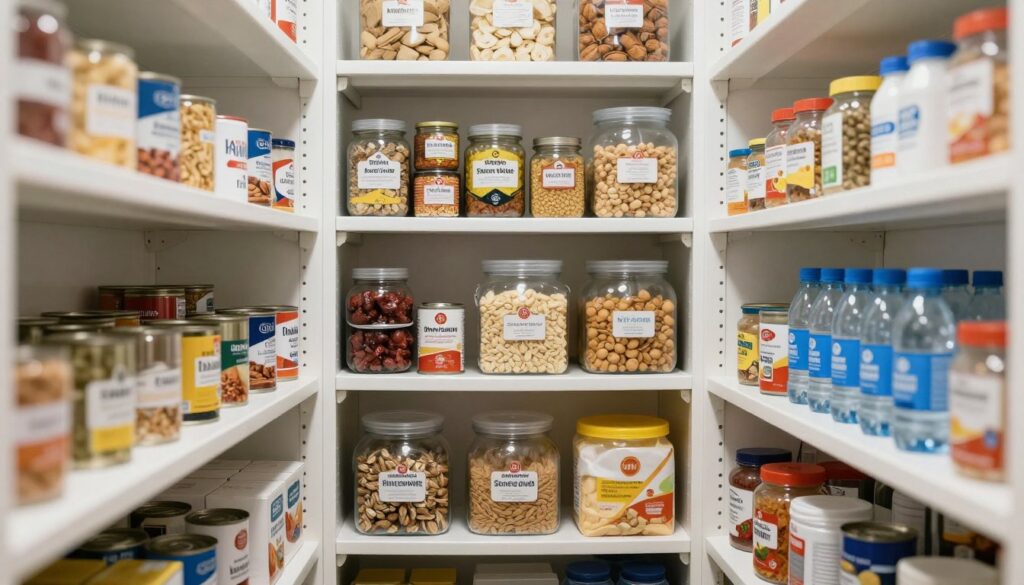
Non-Perishable Food Essentials
Choose foods your family actually eats. Emergency supplies that sit unused because nobody likes them waste money and space.
- Canned proteins including tuna, chicken, and beans
- Canned vegetables and fruits with pop-top lids
- Peanut butter and nuts for protein and calories
- Crackers, granola bars, and dried fruit for snacks
- Powdered milk and shelf-stable milk boxes
- Ready-to-eat meals that need no cooking
- Comfort foods like cookies to reduce stress
- Baby formula and baby food if you have infants
Include a manual can opener in your supplies. Electric openers become useless during power outages, and pop-top cans are not available for every product.
Rotate your stock throughout the year. Use and replace items before expiration dates. This practice keeps your supplies fresh and ensures everything remains edible when needed.
Chest Freezer Preparation
Freeze water in plastic containers to create ice blocks. These blocks keep your freezer colder longer during outages and provide drinking water as they melt.
Fill empty freezer space with frozen items. A full freezer maintains temperature better than one half empty. The frozen mass helps insulate remaining food.
Keep freezer doors closed during outages. Each opening releases cold air and shortens how long food stays frozen. Check contents only when necessary.
Solar-powered chest freezers offer a permanent solution for medication and food storage during extended outages. These specialized freezers run on solar panels, maintaining freezing temperatures even when grid power stays down for weeks. Our solar chest freezer guide compares models and capacity for Gulf Coast conditions.
Medication Storage
Keep a thirty-day supply of prescription medications if possible. Many insurance plans allow early refills before hurricanes when evacuation orders are issued.
Store medications in waterproof containers with your emergency kit. Include a written list of all medications, dosages, and prescribing doctors in case you need refills during evacuation.
Insulin and other temperature-sensitive medications need refrigeration. Small medication coolers with ice packs maintain proper temperature for several days. Portable power stations with small refrigerators offer longer-term solutions.
Ask your doctor for paper prescriptions before hurricane season. Pharmacies in evacuation destinations can fill these prescriptions if you cannot return home quickly.
Pet Food and Supplies
Your pets depend on you for food, water, and safety during hurricanes. Stock two weeks of pet food just like human food supplies.
Keep copies of vaccination records in waterproof storage. Evacuation shelters and hotels require proof of rabies vaccination before accepting pets.
Pet carriers, leashes, and comfort items help reduce animal stress during storms. Include medications, any special dietary needs, and contact information for your veterinarian.
Complete Pet Emergency Kit
Our pet emergency guide covers everything from evacuation supplies to medication storage for Gulf Coast pet owners. Keep your four-legged family members safe during hurricane season.
Home Protection and Shelter Preparation
Protecting your home from wind and water damage reduces costly repairs after storms pass. Some preparations take days to complete, so start early when storms form in the Atlantic.
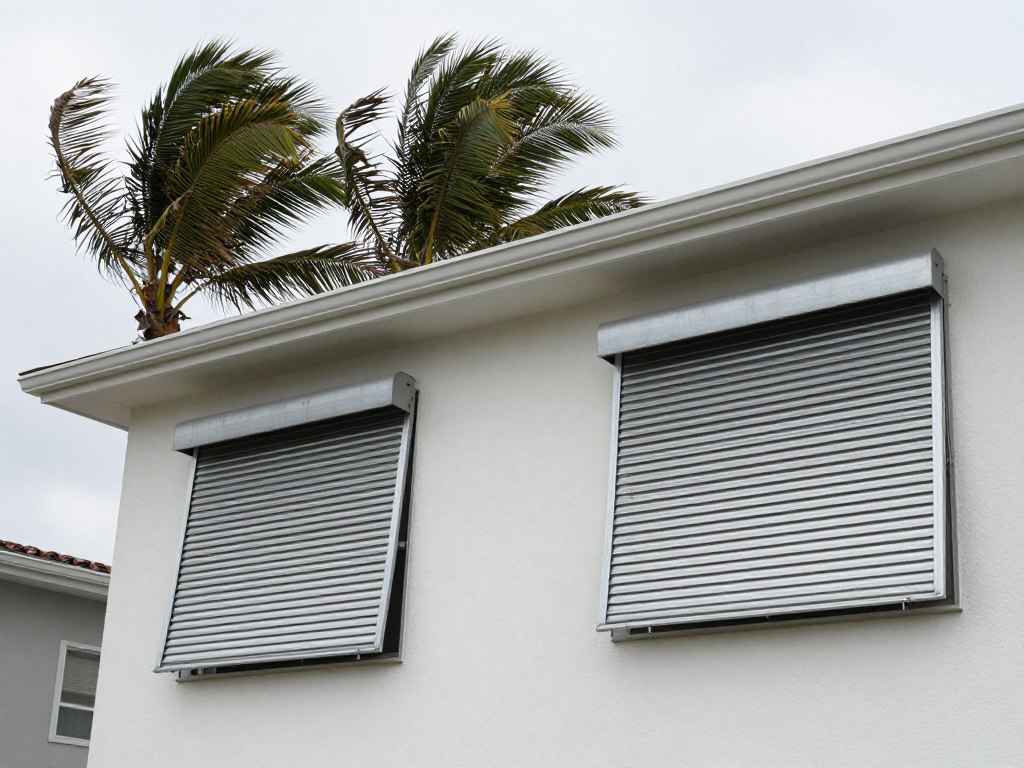
Window and Door Protection
Windows are your home’s most vulnerable points during high winds. Flying debris breaks glass, allowing wind and rain inside your home.
Permanent storm shutters offer the best protection and convenience. These shutters mount permanently and close quickly when storms approach. Metal shutters withstand hurricane-force winds better than fabric alternatives.
Plywood sheets cut to fit each window provide lower-cost protection. Cut sheets before hurricane season and label each piece for its specific window. Use proper anchors rated for hurricane winds, not standard screws.
Never use tape on windows. This outdated method does not prevent breakage and makes cleanup more difficult. Tape provides no structural support against flying debris.
Sliding glass doors need special attention due to their size. Install horizontal bracing or permanent track systems designed for these large openings.
Garage Doors
Garage doors are another weak point in your home’s wind resistance. High winds can bow garage doors inward, compromising your home’s structure and allowing water intrusion.
Retrofit bracing kits strengthen garage doors against wind pressure. These kits install permanently and engage when storms threaten.
If your garage door fails, wind enters your home and increases internal pressure. This pressure can lift your roof from the inside even if roof straps are properly installed.
Outdoor Items
Secure or bring inside any objects that could become projectiles during high winds. Patio furniture, grills, potted plants, and decorations turn into dangerous missiles at seventy-four miles per hour.
Anchor trash cans or move them into your garage. Secure trampolines with ground anchors or disassemble them completely. Take down hanging plants and wind chimes.
Trim trees before hurricane season starts. Remove dead branches and limbs overhanging your home or power lines. This preventive work reduces damage from falling branches during storms.
Sandbags and Flooding Prevention
Sandbags create temporary barriers against flooding when properly stacked. Fill bags two-thirds full and stack them in pyramid formation for stability.
Place sandbags against doors and garage openings to prevent water intrusion. Remember that sandbags slow water but will not stop major storm surge or flooding.
Clear gutters and downspouts before storms arrive. Proper drainage reduces water pooling around your foundation. Extend downspouts away from your home to direct water toward street drainage.
Important Documents
Store copies of critical documents in waterproof containers. Include insurance policies, property deeds, birth certificates, passports, and bank account information.
Photograph or video your home contents before hurricane season. Document valuables, furniture, and personal property for insurance claims. Store this documentation off-site or in cloud storage.
Keep cash in small bills. ATMs and credit card systems fail during widespread power outages. Plan for at least three hundred dollars in mixed bills for immediate post-storm needs.
Hurricane Preparedness for Special Situations
Certain groups face unique challenges during hurricane preparation and evacuation. These situations require specialized planning beyond standard preparedness checklists.
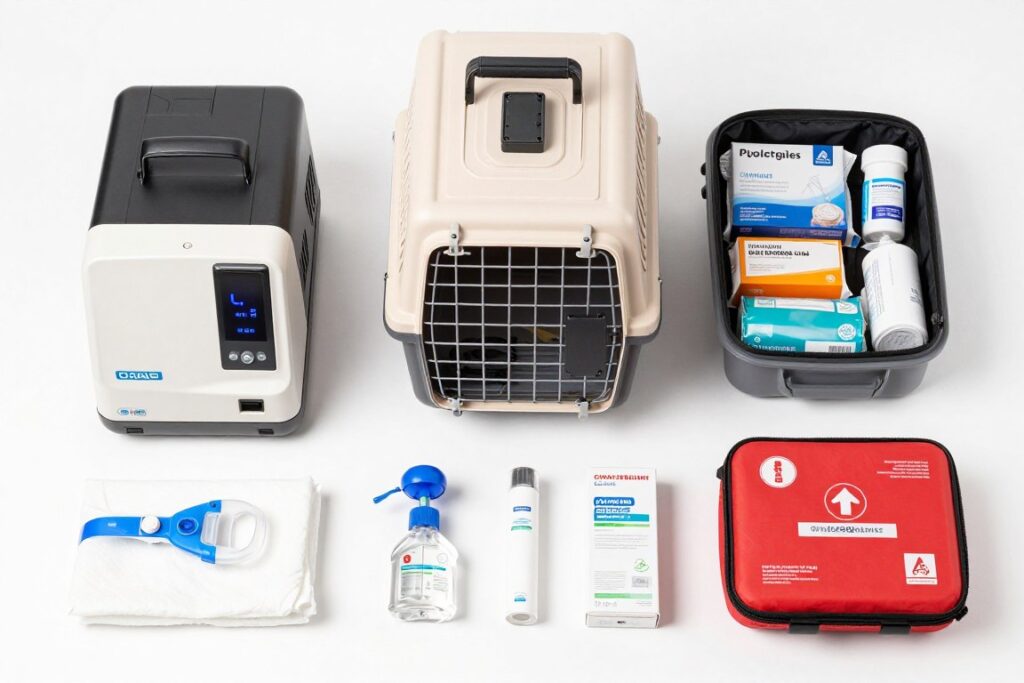
CPAP and Medical Device Users
Sleep apnea patients and people dependent on powered medical equipment face life-threatening risks during extended power outages. Standard emergency planning often overlooks these critical power needs.
Calculate your total power requirements for all medical devices. Add twenty percent extra capacity as a safety margin. Remember that equipment like oxygen concentrators and CPAP machines must run continuously for multiple hours daily.
Battery backup systems specifically designed for medical equipment offer reliable solutions. These systems prioritize medical devices over convenience items when power is limited.
Include backup masks, tubing, and filters in your emergency supplies. Equipment failures happen at the worst times, and replacement parts become impossible to find during disasters.
CPAP Users — Complete Power Solutions
Our comprehensive guide addresses battery capacity calculations, backup equipment, and evacuation planning specifically for sleep apnea patients. Find reliable power solutions that keep your therapy running during multi-day outages.
Renters and Apartment Dwellers
Renters face unique constraints during hurricane preparation. You cannot install permanent storm shutters or whole-home generators. Storage space for supplies is limited.
Focus on portable solutions that travel with you. Portable power stations, collapsible water containers, and compact emergency supplies work well in apartments.
Know your building’s hurricane procedures. Ask property management about generator backup, shelter-in-place options, and evacuation protocols. Some apartment buildings provide designated shelter areas for residents.
Window protection in rentals requires landlord approval. Removable film or temporary barriers offer protection without permanent installation.
Renter Hurricane Preparedness
Our renter-specific guide covers space-efficient solutions, portable backup power, and apartment-friendly preparation methods. You do not need a generator or permanent installations to stay safe.
Pet Owners
Pets are family members who depend on you for safety during hurricanes. Many evacuation shelters do not accept animals, requiring advance planning for pet-friendly accommodations.
Identify pet-friendly hotels and shelters along your evacuation routes before hurricane season starts. Make reservations early when evacuation orders are issued, as pet-friendly spaces fill quickly.
Microchip your pets and ensure registration is current. Collars with ID tags can fall off during storms. Permanent identification helps reunite you with lost pets after disasters.
Cats and dogs need separate carriers for safe transport. Never leave pets loose in vehicles during evacuation. Crate training before hurricane season reduces stress during actual emergencies.
Pet Emergency Planning
Our complete pet emergency guide covers evacuation supplies, medication storage, carrier selection, and finding pet-friendly shelter. Every item your four-legged family member needs to stay safe.
Hurricane Season Timeline — Monthly Preparation Schedule
Hurricane season runs from June through November. Spreading preparation tasks across these months makes the work manageable and ensures nothing gets forgotten.
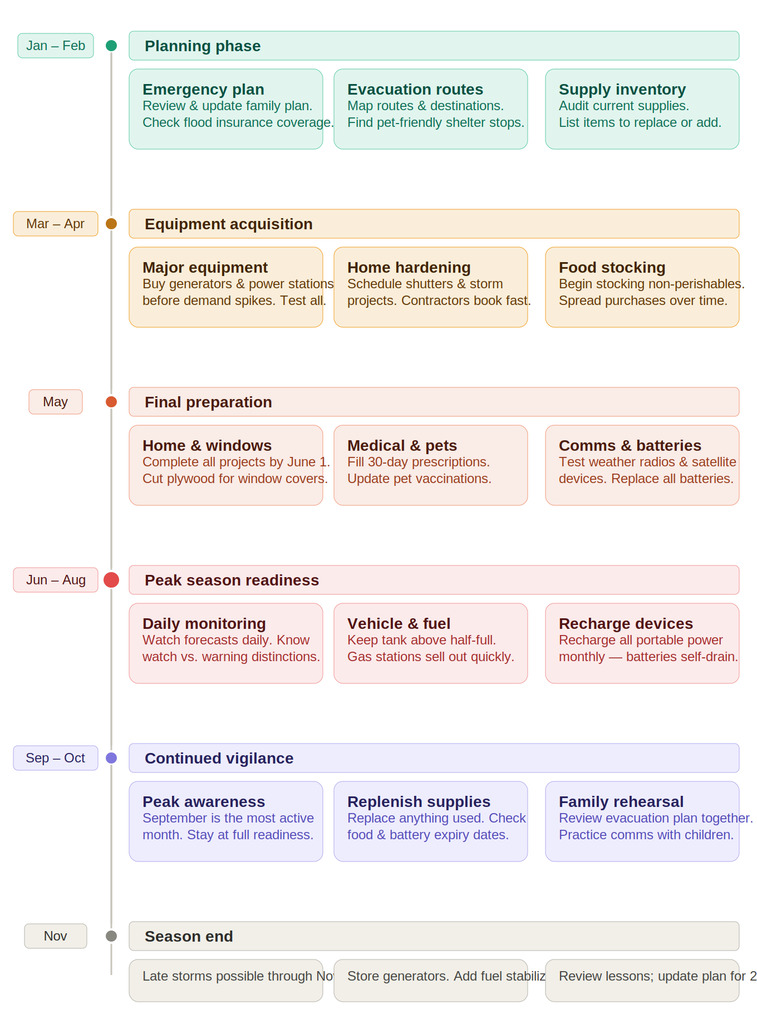
January — February: Planning Phase
Review and update your family emergency plan. Check insurance coverage including flood insurance separate from homeowner policies.
Create or update your evacuation plan. Identify routes, destinations, and pet-friendly accommodations along the way.
Inventory your current emergency supplies. Make a list of items that need replacement or additions.
March — April: Equipment Acquisition
Purchase major equipment like power stations and generators before demand increases. Test all equipment to ensure proper operation.
Schedule any home hardening projects like installing storm shutters. Contractors book up quickly as hurricane season approaches.
Begin stocking non-perishable food items. Spread purchases across multiple shopping trips to avoid budget strain.
May: Final Preparation
Complete all home improvement projects before June first. Cut plywood for windows if using temporary protection methods.
Fill prescriptions for thirty-day supplies of medications. Update pet vaccinations and ensure records are current.
Test communication devices including weather radios and satellite communicators. Replace batteries in all emergency equipment.
June — August: Peak Season Readiness
Monitor weather forecasts daily. Know the difference between tropical storms, hurricane watches, and hurricane warnings.
Keep vehicles fueled above half tank throughout hurricane season. Gas stations run out quickly when storms approach.
Recharge all portable power devices monthly. Batteries lose charge over time even when not in use.
September — October: Continued Vigilance
September is historically the most active month for Atlantic hurricanes. Maintain full readiness through October.
Replenish any supplies used earlier in the season. Check expiration dates on food, medications, and batteries.
Review evacuation plans with family members. Practice communication procedures with children.
November: Season End
Hurricane season officially ends November thirtieth, but late-season storms occasionally form.
Properly store equipment like generators and power stations for off-season. Add fuel stabilizer to gasoline-powered equipment.
Review what worked and what needs improvement for next season. Update your preparedness plan based on lessons learned.
Printable Hurricane Preparedness Checklist
Use this comprehensive list to ensure you have everything needed for hurricane season. Print this section and check off items as you acquire them.
Power and Lighting
- Portable power station or generator
- Solar panels for recharging
- Extension cords and power strips
- Flashlights for each family member
- Battery-powered lanterns
- Extra batteries in all sizes
- Battery charger with rechargeable batteries
- CPAP battery backup if needed
Water and Sanitation
- One gallon per person per day for seven days
- Additional water for pets
- Water filtration system
- Water purification tablets
- WaterBOB bathtub liner
- Moist towelettes for cleaning
- Garbage bags and ties
- Plastic bucket with lid
Food and Kitchen
- Two-week supply of non-perishable food
- Manual can opener
- Paper plates and plastic utensils
- Cooler with ice packs
- Camping stove with fuel
- Waterproof matches or lighter
- Pet food and supplies
- Baby formula and food if needed
Communication and Information
- NOAA weather radio with alerts
- Satellite communicator device
- Portable phone chargers
- Backup charging cables
- Family communication plan copies
- Emergency contact list
- Local emergency numbers
- Battery-powered or hand-crank radio
Medical and Personal
- First aid kit with supplies
- Prescription medications for thirty days
- Over-the-counter medications
- Medical equipment and supplies
- Glasses and contact lenses
- Personal hygiene items
- Sunscreen and insect repellent
- Special needs items
Home Protection
- Storm shutters or plywood for windows
- Plastic sheeting and duct tape
- Tarps in multiple sizes
- Sandbags for flooding
- Tools for emergency repairs
- Chain saw with fuel and oil
- Work gloves and safety glasses
- Rain gear for outdoor work
Important Documents
- Insurance policies in waterproof container
- Property deeds and titles
- Birth certificates and passports
- Bank account information
- Credit card copies front and back
- Medical records and prescriptions
- Pet vaccination records
- Cash in small bills
Ready to Secure Your Home? Start with These Essential Guides
Our detailed product guides help you choose the right equipment for your specific Gulf Coast situation. Each guide includes real-world testing, brand comparisons, and budget options.
Hurricane Preparedness Questions Answered

What should be on my 2026 hurricane preparedness checklist?
Your 2026 hurricane preparedness checklist should include five categories: power backup systems, water storage and filtration, emergency communication devices, food and medication supplies, and home protection equipment. Start with portable power stations or generators, store one gallon of water per person per day for seven days, get a NOAA weather radio, stock two weeks of non-perishable food, and install storm shutters or cut plywood for windows. Add CPAP battery backup if needed, satellite communicators for when cell towers fail, and waterproof document storage for insurance policies and identification.
When should I start preparing for hurricane season in Florida and the Gulf Coast?
Start hurricane preparation in January by reviewing your emergency plan and insurance coverage. Purchase major equipment like power stations in March and April before demand increases prices and reduces availability. Complete home hardening projects by May. Hurricane season officially begins June first and runs through November thirtieth, with September historically being the most active month. Do not wait until a storm forms to begin preparation—store shelves empty quickly and contractors become unavailable once hurricanes threaten the coast.
How much water do I need to store for a hurricane?
Store one gallon of water per person per day as your baseline. A family of four needs twenty-eight gallons for a one-week supply. Double this amount if you have pets. Use five-gallon water jugs or store-bought bottled water stacked in your garage or closet. The WaterBOB bathtub liner holds one hundred gallons of fresh water and works perfectly for apartment dwellers with limited storage space. Add water filtration systems to extend your supply when stored water runs low during extended outages.
What kind of generator do I need for hurricane season?
Portable power stations replaced traditional gas generators for many Gulf Coast families because they run silently indoors, need no fuel, and start instantly. Choose capacity based on your devices—a 1000Wh unit powers essentials for hours while 2000Wh to 3000Wh stations keep refrigerators running for days. Pair power stations with solar panels for unlimited runtime during week-long outages. CPAP users need specialized battery backup with calculated capacity for uninterrupted sleep. Whole-home generators provide comprehensive protection but cost significantly more and require professional installation.
What food should I stock for hurricanes?
Stock two weeks of non-perishable food your family actually eats including canned proteins like tuna and chicken, canned vegetables and fruits, peanut butter, crackers, granola bars, dried fruit, and ready-to-eat meals. Add powdered milk, baby formula if you have infants, and comfort foods like cookies to reduce stress. Include a manual can opener since electric openers fail during power outages. Rotate stock throughout the year by using and replacing items before expiration dates. Keep your freezer full of ice blocks to extend how long food stays frozen during outages.
Do I need hurricane insurance in addition to homeowners insurance?
Standard homeowners insurance covers wind damage from hurricanes but excludes flooding. Purchase separate flood insurance through the National Flood Insurance Program or private insurers regardless of whether you live in a designated flood zone—thirty percent of flood claims come from outside high-risk areas. Review your coverage limits annually to ensure replacement cost coverage keeps pace with construction costs and home values. Document your home contents with photos or video before hurricane season for easier insurance claims after storms. Store copies of all insurance policies in waterproof containers with your emergency supplies.
How do I protect my home windows during a hurricane?
Permanent storm shutters offer the best window protection and mount permanently for quick deployment when storms approach. Metal shutters withstand hurricane-force winds better than fabric alternatives. Plywood sheets cut to fit each window provide lower-cost protection—cut sheets before hurricane season, label each piece, and use proper anchors rated for hurricane winds. Never use tape on windows as this outdated method provides no structural support against flying debris. Sliding glass doors need special horizontal bracing or permanent track systems designed for large openings.
What communication devices work when cell towers are down?
NOAA weather radios receive continuous broadcasts from the National Weather Service even when internet and cell service fail, alerting you to warnings and evacuation orders. Look for radios with battery, hand crank, and solar charging options. Satellite communicators like Garmin inReach and ZOLEO send text messages directly to satellites, bypassing ground infrastructure entirely for two-way communication with family and emergency services. These devices require monthly subscriptions but plans suspend when not in use—activate service just during June through November hurricane season.
What special preparations do CPAP users need for hurricanes?
CPAP users face serious risks during power outages and need specialized battery backup beyond standard emergency supplies. Calculate your nightly watt-hours by checking your machine specifications—most CPAP devices draw thirty to sixty watts depending on pressure settings and humidifier use. Multiply nightly usage by seven days for safe backup capacity. Battery packs specifically designed for CPAP use offer compact solutions for patients who evacuate. Include backup masks, tubing, and filters in emergency supplies since equipment failures happen during disasters when replacements become impossible to find.
How can renters prepare for hurricanes without generators or permanent installations?
Renters should focus on portable solutions including portable power stations that travel with you, collapsible water containers for limited storage space, and compact emergency supplies. Ask property management about building generator backup, shelter-in-place options, and evacuation protocols—some apartment buildings provide designated shelter areas. Window protection in rentals requires landlord approval but removable film or temporary barriers offer protection without permanent installation. The WaterBOB bathtub liner provides one hundred gallons of water storage perfect for apartments with no storage space for traditional containers.
Your Hurricane Preparedness Starts Now
Hurricane season brings powerful storms to the Gulf Coast every year. Families who prepare early avoid the chaos of last-minute shopping and long gas lines when hurricanes approach.
This complete 2026 hurricane preparedness checklist gives you the framework to protect your home and family. Start with power backup and water storage since these affect survival immediately during outages. Add communication devices, food supplies, and home protection as your budget allows.
Review your preparations each spring before June first. Test equipment, rotate supplies, and update your family communication plan. These simple steps ensure everything works when you need it most.
The cost of preparation is far less than the cost of recovery after a hurricane damages your home and disrupts your life. Take action now while stores have inventory and contractors have availability.
Gulf Coast residents have weathered hurricanes for generations. With proper preparation, you will weather the next storm safely too.