After Hurricane Ian tore through Southwest Florida, more than 150,000 residents faced boil-water advisories that lasted weeks. Tap water became a silent threat. Sewage contamination seeped into municipal systems. Chemical runoff from flooded industrial areas mixed with drinking water supplies. Families with young children and elderly relatives faced impossible choices.
Bottled water disappeared from store shelves within hours. Those who waited found themselves standing in four-hour distribution lines for a single case per family. Many didn’t realize that tap water contamination is one of the most underestimated dangers after a hurricane strikes the Gulf Coast.
A quality water filter isn’t just emergency gear. It’s essential hurricane preparedness equipment that protects your family when municipal systems fail. This comprehensive guide breaks down exactly which filters work best for hurricane situations, how to filter water from emergency sources, and what you need to know before the next storm arrives.
Affiliate Disclosure: Coastal Guardians is a participant in the Amazon Services LLC Associates Program. As an Amazon Associate we earn from qualifying purchases at no additional cost to you.
Why Hurricane Flooding Contaminates Municipal Water Supplies
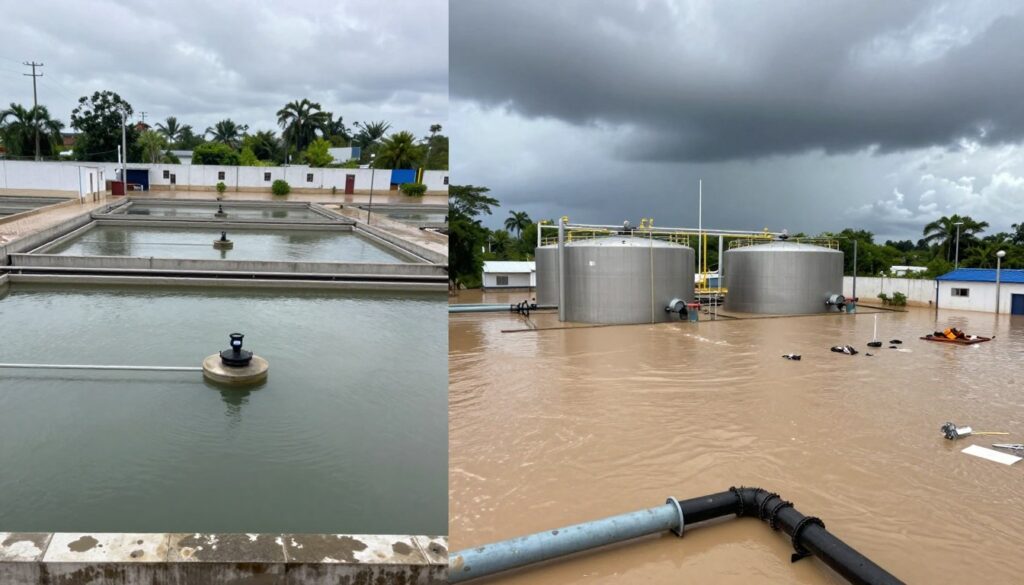
Municipal water systems along the Gulf Coast face three critical threats when hurricanes strike. Understanding these contamination pathways helps you recognize why standard tap water becomes unsafe even days after storm surge recedes.
Sewage Intrusion and Bacterial Contamination
Floodwaters overwhelm sewage treatment plants. Raw sewage backs up into water distribution lines. When pressure drops in municipal systems during power outages, contaminated floodwater gets sucked into supply pipes through cracks and valve failures.
E. coli, Salmonella, and other dangerous bacteria infiltrate drinking water. These pathogens cause severe gastrointestinal illness, especially in children under five and adults over sixty-five. Boiling kills bacteria, but most families lack the fuel or power to boil sufficient water for drinking, cooking, and basic hygiene.
Infrastructure Damage and Chemical Exposure
Hurricane winds and flooding damage treatment facilities. Chemical dosing systems fail. Chlorination stops working properly. Meanwhile, floodwaters pick up petroleum products from submerged vehicles, agricultural pesticides from farmland, and industrial chemicals from manufacturing areas.
These chemical contaminants don’t evaporate when you boil water. Some become more concentrated. Standard municipal treatment can’t remove them without functional filtration equipment and power to run advanced purification systems.
Extended Recovery Periods
Water system restoration takes weeks, not days. Treatment plants need extensive repairs. Distribution pipes require inspection and pressure testing. Each step demands time that stressed families don’t have.
Boil-water advisories continue long after electricity returns. Even when officially lifted, many coastal residents report persistent water quality issues for months. Having your own filtration system means you control your family’s water safety regardless of municipal recovery timelines.
Don’t Wait for Contamination Reports
Municipal alerts often lag behind actual contamination events. Protect your family now with proven emergency water filtration systems.
The Critical Difference Between Water Filters and Water Purifiers
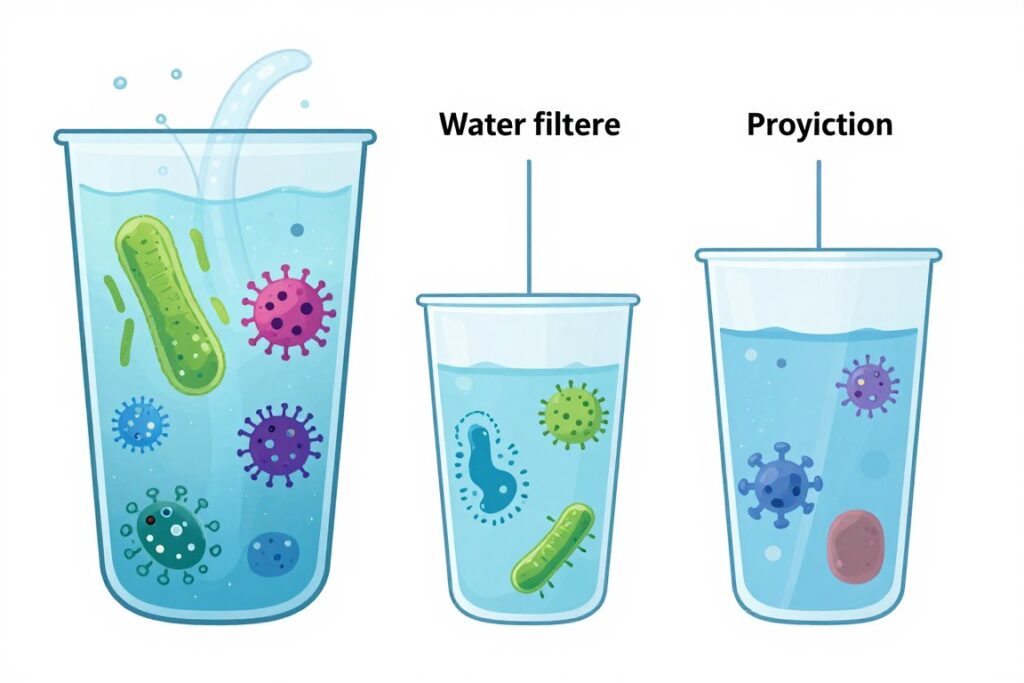
This distinction determines whether your emergency water system actually protects you. Many homeowners purchase the wrong equipment because they don’t understand what filters can and cannot remove from contaminated water sources.
What Water Filters Remove
Water filters use physical barriers to trap contaminants. Microfiltration systems with 0.1 micron pores catch bacteria like E. coli and parasites like Giardia. They excel at removing sediment, rust, and larger particles that make water cloudy or bad-tasting.
Most portable camping filters fall into this category. They work excellently for lakes, streams, and stored water that hasn’t been chemically contaminated. For hurricane preparedness, filters handle bacteria from sewage intrusion effectively.
What Water Purifiers Do Differently
Water purifiers eliminate viruses, which are 100 times smaller than bacteria. They also address chemical contaminants through activated carbon or reverse osmosis. Purification systems use UV light, chemical treatment, or extremely fine membrane filtration.
Hurricane floodwater contains viruses from human waste. It carries chemical pollutants from submerged vehicles and industrial areas. True purification becomes essential when you’re filtering questionable sources or when municipal contamination includes more than just biological threats.
Which Type for Hurricane Season
The best water filter for hurricane season actually combines both technologies. Gravity filtration systems with ceramic or carbon elements provide purification-level protection. Portable filters paired with purification tablets offer two-stage treatment.
For pre-stored bathtub water or rain collection, quality filters suffice. For standing floodwater or severely compromised municipal supplies, purification capability becomes critical. This guide recommends systems that meet EPA purification standards for microbiological water safety.
Best for Filters Only
- Pre-stored bathtub water (filled before storm)
- Rainwater collected from clean roof surfaces
- Municipal water during boil-water advisories (bacteria removal)
- Wells with good sanitary protection
Purification Required
- Any standing floodwater or puddles
- Water from unknown sources
- Severely compromised municipal systems
- Areas with industrial or agricultural runoff
How to Filter Water from Emergency Sources During Hurricanes
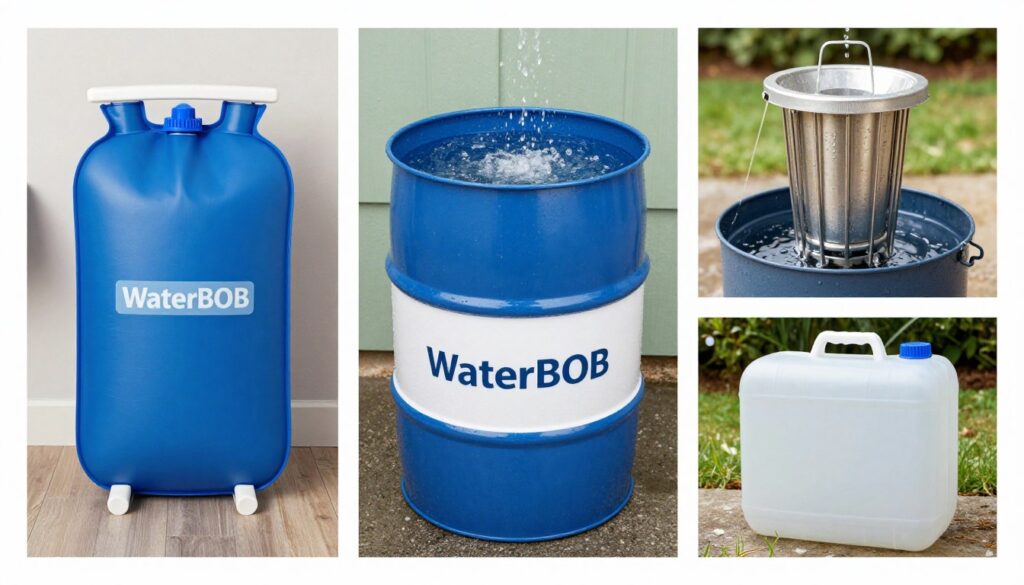
When municipal water fails, knowing which emergency sources are safest makes the difference between adequate hydration and dangerous dehydration. Each source requires specific filtration approaches.
Bathtub Water Storage – Your Best Hurricane Water Source
Fill your bathtub using a WaterBOB bladder before the storm arrives. This food-grade plastic liner holds 100 gallons of clean municipal water. It seals completely to prevent contamination from tub surfaces.
Water stored this way remains safe for weeks. You can drink it with minimal filtration. A simple activated carbon filter removes any chlorine taste and catches particles that might settle. This method provides the cleanest emergency water supply for families.
Never use bare bathtub storage. Tub surfaces harbor bacteria. Soap residue contaminates stored water. The WaterBOB system costs less than thirty dollars and transforms your bathtub into a certified emergency water tank.
Rain Collection During and After the Storm
Rainwater from clean roof surfaces offers another viable source. Let the first fifteen minutes of rain wash roof debris away. Then collect water in sanitized containers covered with fine mesh to exclude insects and leaves.
Roof-collected rainwater needs filtration to remove bird droppings, pollen, and atmospheric particles. Gravity filters with ceramic elements work perfectly for this application. They remove biological contaminants while improving taste and clarity.
Avoid collecting rain from asphalt shingle roofs if possible. Petroleum compounds leach from roofing materials. Metal roofs provide cleaner collection surfaces. Always filter rainwater before drinking, even if it looks clear.
Swimming Pool Water – Last Resort Only
Chlorinated pool water can be filtered for emergency use. The chlorine level makes it safer than untreated sources. However, pool chemicals include stabilizers and algaecides not meant for consumption.
Use multi-stage filtration with activated carbon to remove chemical additives. Expect an unpleasant taste even after filtering. Reserve pool water for washing and sanitation when possible. Drink it only when no other sources exist.
Standing Floodwater – Extreme Emergency Only
Standing floodwater is the most contaminated source. It contains sewage, chemicals, decomposing organic matter, and potentially toxic runoff. Filter it only in true survival situations when absolutely no other water exists.
Pre-filter through cloth to remove large particles and sediment. Then use a purification-rated system, not just a filter. Chemical treatment with purification tablets provides additional safety. Boil the water afterward if you have fuel and fire capability.
Children, pregnant women, and immunocompromised individuals should avoid floodwater consumption even after treatment. Prioritize any other available water source first.
Best Water Filters for Hurricane Season – Quick Comparison
This comparison table breaks down the top-performing water filtration systems for Gulf Coast hurricane preparedness. Each option balances portability, capacity, filtration effectiveness, and family-size suitability.
| Filter System | Type | Capacity | Removes | Best For | Price Range |
| Sawyer Squeeze Editor’s Choice | Portable Squeeze Filter | 100,000 gallons | Bacteria, protozoa, sediment | Versatile emergency use, families | $35-45 |
| LifeStraw Personal | Straw Filter | 1,000 gallons | Bacteria, parasites | Individual backup, bugout bags | $15-20 |
| Waterdrop Gravity Filter | Gravity Bag System | 5,000 gallons per filter | Bacteria, protozoa, chemicals, heavy metals | Family base camp, kitchen use | $65-80 |
| Berkey Alternative (ProPur) | Countertop Gravity | 3,000 gallons per element | Bacteria, viruses, chemicals, fluoride | Home base, long-term outages | $250-350 |
| ZeroWater Pitcher | Pour-Through Pitcher | 25-40 gallons per filter | Dissolved solids, chemicals, some metals | Treating stored bathtub water | $35-50 |
| WaterBOB | Storage Bladder (not filter) | 100 gallons storage | N/A – stores clean water | Pre-storm water storage | $25-35 |
Each system serves specific hurricane preparedness needs. The following sections provide detailed analysis of how these filters perform in real-world emergency situations, including pros, cons, and specific use cases for Gulf Coast families.
Editor’s Choice: Sawyer Squeeze Water Filter System
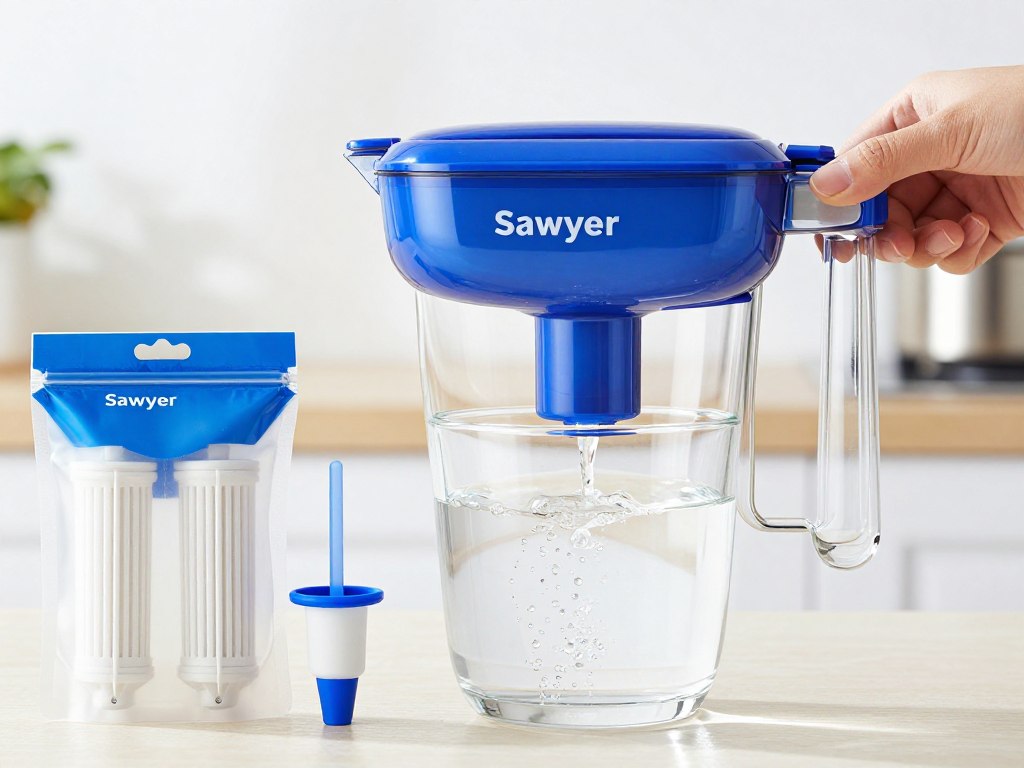
The Sawyer Squeeze earns our top recommendation for Gulf Coast hurricane preparedness. This portable filtration system delivers purification-level performance in a package that costs less than a case of bottled water. It removes 99.99999% of bacteria and 99.9999% of protozoa including Giardia and Cryptosporidium.
Why Sawyer Squeeze Excels for Hurricanes
Versatility makes this filter invaluable during extended power outages. Attach it directly to standard water bottles, included squeeze pouches, or even bladder hydration systems. Fill a pouch from your bathtub storage, rainwater collection, or emergency sources. Squeeze filtered water into cooking pots or drinking containers.
The hollow fiber membrane lasts for 100,000 gallons. That’s enough clean drinking water for a family of four for more than five years of daily use. Replace it never, not every few months like pitcher filters. The included cleaning plunger lets you restore flow rate by backflushing sediment.
Weight matters when evacuating or moving between shelter locations. The Sawyer Squeeze weighs just two ounces. Toss it in any emergency bag. Keep one in your vehicle. Store another with your hurricane supplies. At this price point, most families purchase multiple units.
Real-World Hurricane Performance
During Hurricane Sally recovery, Mobile Bay area residents reported filtering bathtub-stored water through Sawyer systems for three weeks. Families with wells that lost power used it to filter stored rainwater. The system handled sediment from collection containers without clogging.
Flow rate starts at one liter per minute when new. It slows with sediment buildup but backflushing restores performance. Pre-filter muddy or very cloudy water through coffee filters or cloth to extend the membrane life and maintain flow.
Advantages
- Exceptional 100,000-gallon capacity eliminates replacement costs
- Removes 99.99999% of bacteria and 99.9999% of protozoa
- Versatile attachment options for bottles, pouches, and bladders
- Lightweight at 2 ounces – easy to store and transport
- Includes backflush cleaning system for field maintenance
- Outstanding value under $50 for multi-year family protection
Limitations
- Does not remove viruses (adequate for most hurricane scenarios)
- Requires manual squeezing effort – tiring for large volumes
- Flow rate decreases with sediment – needs periodic backflushing
- Pouches can develop leaks with rough handling
- Not ideal for severely contaminated floodwater without pre-filtering
Best Uses for Hurricane Preparedness
The Sawyer Squeeze handles bathtub-stored water perfectly. It excels at filtering rainwater collected from roof surfaces. Use it for treating municipal tap water during boil-water advisories. Families report filtering water for drinking, cooking, and even pet bowls during multi-week outages.
Pair it with purification tablets if you must filter questionable standing water. The filter removes sediment and biological contaminants. Tablets address viral threats and provide chemical disinfection backup. This combination offers purification-level protection for extreme emergency scenarios.
Package Includes
- Sawyer Squeeze filter with 0.1 micron hollow fiber membrane
- Two 32-ounce collapsible reusable squeeze pouches
- Cleaning coupling for backflushing maintenance
- Syringe for backflush cleaning
- Detailed instruction manual and maintenance guide
Capacity: 100,000 gallons (378,541 liters)
Flow Rate: 1.7 liters per minute (when new)
Weight: 2 ounces (filter only)
Dimensions: 5 × 2 inches
Filter Pore Size: 0.1 micron absolute
LifeStraw Personal Water Filter – Individual Emergency Backup
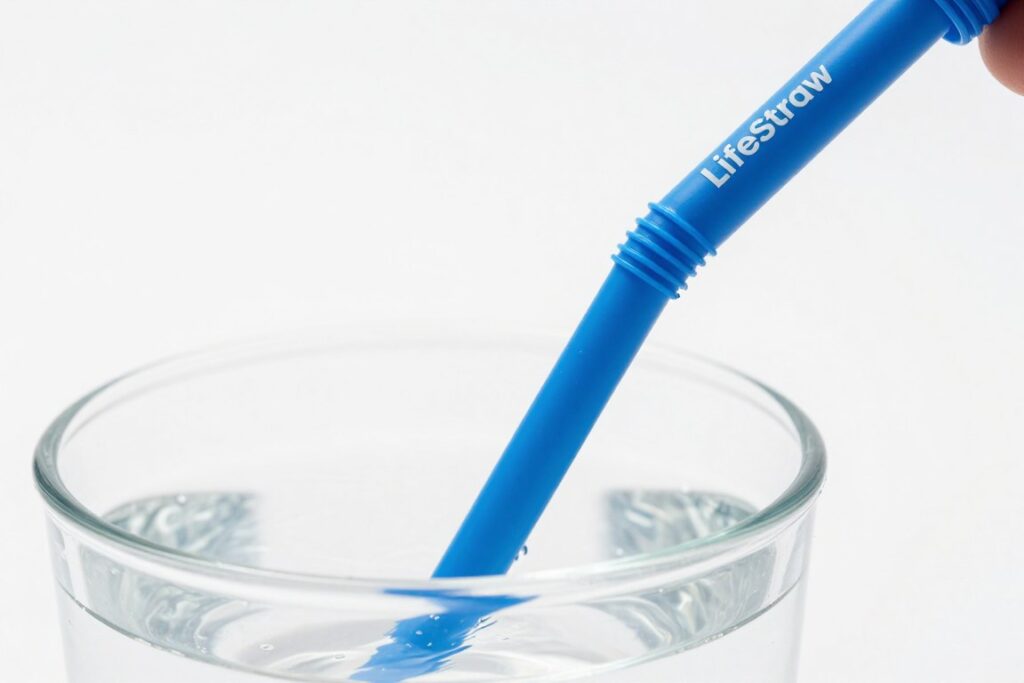
The LifeStraw Personal offers the ultimate individual backup for hurricane kits and bugout bags. This straw-style filter weighs less than two ounces. Toss one in every family member’s emergency pack. Store extras in vehicles, at work, and with relatives who might shelter with you.
How LifeStraw Works in Hurricane Scenarios
Drink directly from water sources through the straw. The hollow fiber membrane filters water as you sip. It removes 99.999999% of bacteria, 99.999% of parasites, and 99.999% of microplastics. Each unit filters 1,000 gallons before replacement.
This system suits individual hydration needs. One person drinking a gallon daily gets nearly three years of use. Families need multiple units. The low cost makes buying four or five LifeStraws practical for household coverage.
Hurricane-Specific Advantages
No setup, no assembly, no parts to lose. Unwrap it and drink. Children old enough to use a drinking straw can operate a LifeStraw. Elderly family members appreciate the simplicity compared to complex filtration systems.
The straw format creates limitations. You cannot filter water into containers for cooking. Bathing and sanitation remain unfiltered. Think of LifeStraw as emergency drinking backup, not a complete family water system.
Advantages
- Ultra-lightweight at 1.6 ounces – perfect for evacuation bags
- Zero setup required – drink immediately from any source
- Extremely affordable backup at under $20 per unit
- Simple enough for children and elderly to use
- Removes 99.999999% of waterborne bacteria
- No batteries, no moving parts, no maintenance needed
Limitations
- Individual use only – not practical for family water needs
- Cannot fill containers for cooking or food prep
- Limited 1,000-gallon capacity requires eventual replacement
- Requires direct access to water source (cannot use with sealed containers)
- Does not remove viruses, chemicals, or heavy metals
- Becomes difficult to draw through when clogged with sediment
Recommended Hurricane Uses
Include one LifeStraw per person in evacuation bags. Keep them in vehicle emergency kits. Add them to workplace desk drawers for office workers who might get stranded during evacuations. Use them as backup when primary filtration systems fail or run out of capacity.
They work excellently for drinking from bathtub-stored water. Rainwater collection becomes instantly drinkable. During neighborhood water distribution events, filter the provided water for extra safety assurance.
LifeStraw Specifications
Filtration: 0.2 micron hollow fiber membrane
Removes: 99.999999% bacteria, 99.999% parasites, 99.999% microplastics
Capacity: 1,000 gallons (4,000 liters)
Flow Rate: 1.7 liters per minute initially
Weight: 1.6 ounces
Length: 8.9 inches
Shelf Life: Unlimited when stored properly
For family hurricane preparedness, purchase one LifeStraw per person plus one spare. Total investment for a family of four runs under $100 for backup coverage that lasts years.
Waterdrop Gravity Water Filter – Family Base Camp System
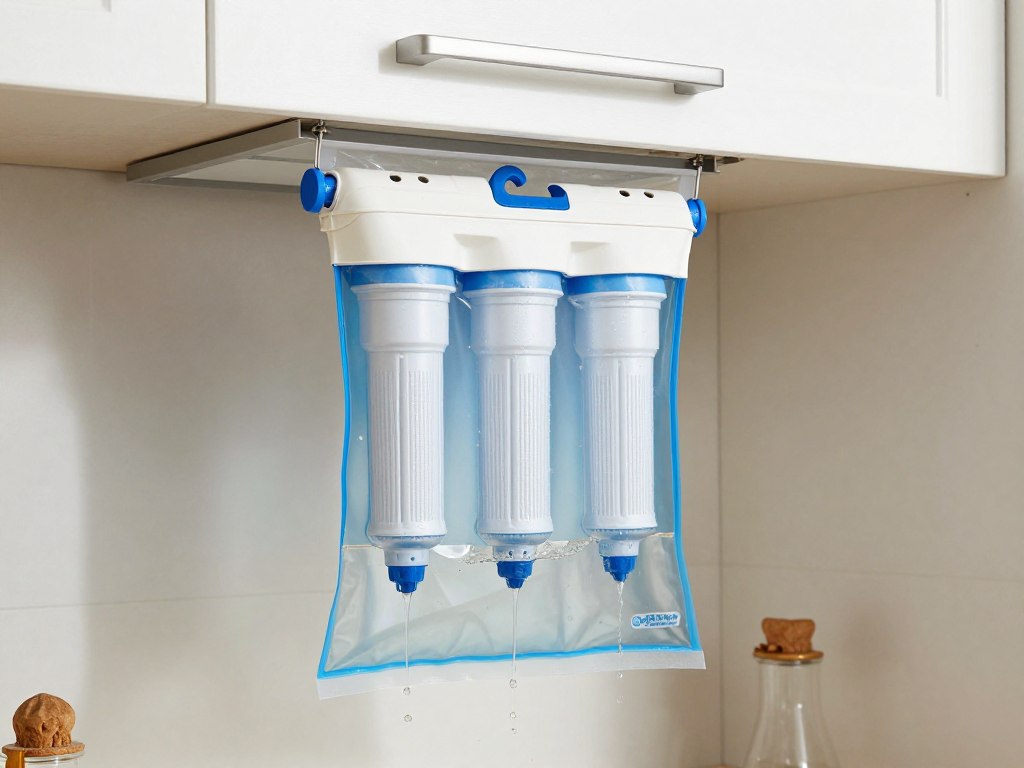
Gravity filtration systems excel when families shelter in place during extended power outages. The Waterdrop system filters large volumes without electricity, batteries, or manual pumping. Hang the bag, fill it with water, and gravity pulls clean filtered water into the collection reservoir.
Why Gravity Systems Work for Hurricane Recovery
Filter ten liters in under thirty minutes. That provides sufficient drinking and cooking water for a family of four for an entire day. The hands-free operation lets you focus on other recovery tasks while water filters continuously.
The filter cartridge removes bacteria, protozoa, and reduces heavy metals and chlorine. Activated carbon addresses chemical contaminants that enter water supplies during flooding. This multi-stage filtration provides broader protection than simple hollow-fiber filters.
Setup and Operation
The system includes two durable bags. Fill the upper reservoir with untreated water from your bathtub storage, rainwater collection, or emergency sources. Hang it from a cabinet knob, tree branch, or door hook. Filtered water flows into the lower bag within twenty to forty minutes depending on water quality.
Clean water dispenses through a spigot. Fill cooking pots, drinking bottles, or washing basins easily. The gravity flow continues until the upper reservoir empties. Refill and repeat as needed for continuous water supply.
Advantages
- High capacity 10-liter system suitable for families
- No electricity, batteries, or manual effort required
- Removes bacteria, protozoa, heavy metals, and chemicals
- Hands-free operation – filters while you handle other tasks
- Convenient spigot for easy dispensing into containers
- Portable enough for evacuation to relatives or shelters
- Filter replacement every 5,000 gallons keeps costs manageable
Limitations
- Requires hanging point – not suitable for all locations
- Slower than squeeze systems for immediate small quantities
- Bags can puncture with rough handling or sharp objects
- Replacement filters add ongoing cost every 1-2 years
- Larger size takes more storage space than compact options
- Filter performance degrades with extremely muddy water
Best Hurricane Applications
This system shines for families sheltering in place. Set it up in your kitchen and filter bathtub-stored water throughout the day. Rainwater collection becomes a sustainable water source when you can filter multiple gallons continuously.
The portability helps if you evacuate to family or friends. Bring your water filtration capability with you. Many shelters allow personal water filtration systems. Having your own clean water supply reduces dependence on limited shelter resources.
Waterdrop System Details
Capacity: 10 liters (2.6 gallons) per cycle
Filter Life: 5,000 gallons before replacement needed
Filtration: 0.1 micron hollow fiber membrane plus activated carbon
Removes: 99.99% bacteria, 99.99% protozoa, heavy metals, chlorine, chemicals
Flow Rate: 10 liters in 20-40 minutes (depends on water turbidity)
Weight: 13 ounces (system with bags)
Dimensions: Bags fold to 8 × 6 inches for storage
Replacement filters cost approximately $30 and last most families 12-18 months with regular emergency use plus normal camping or outdoor activities.
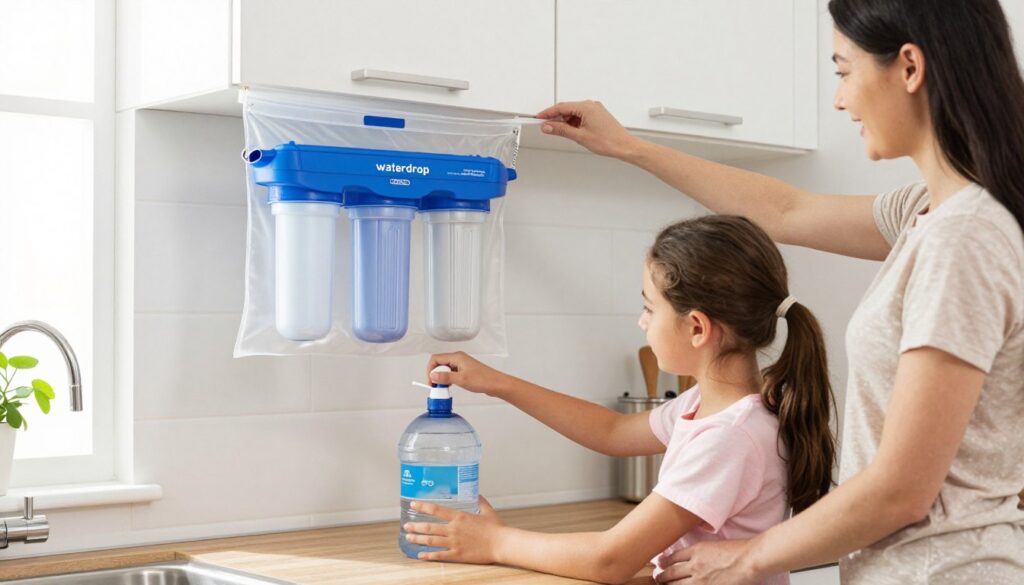
ProPur Countertop Gravity Filter – Berkey Alternative for Home Base
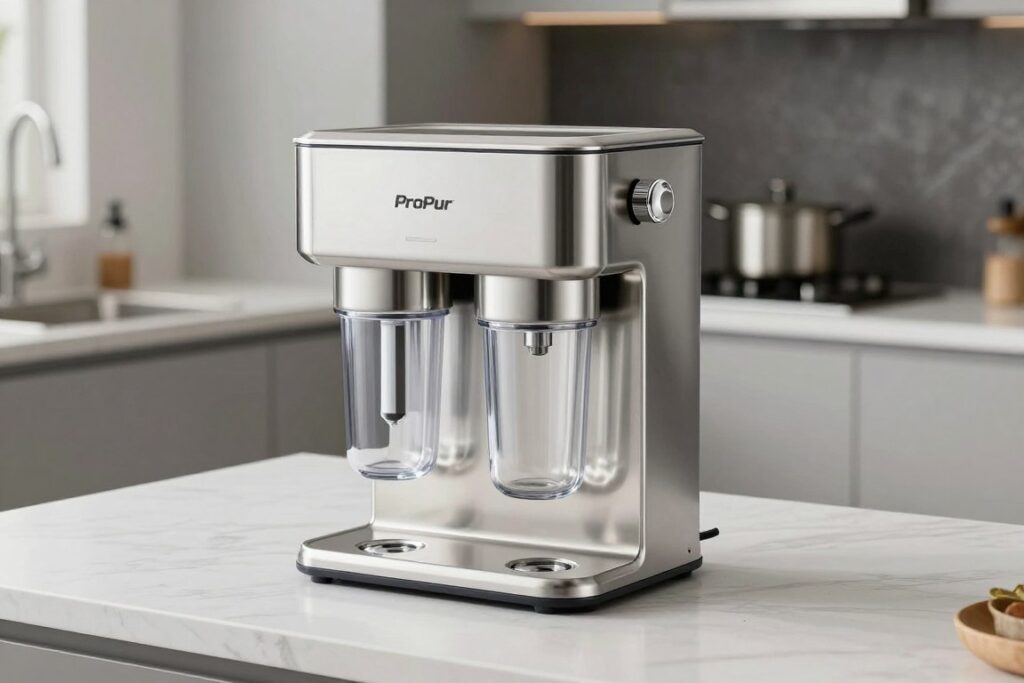
Countertop gravity filters provide the highest level of home water purification without electricity. The ProPur system offers Berkey-level performance at a more accessible price point. These systems remove viruses, bacteria, heavy metals, fluoride, and hundreds of chemical contaminants.
Why Countertop Systems Excel for Extended Outages
Hurricane recovery often means weeks without reliable municipal water. Countertop systems become your household water utility. Fill the upper chamber with questionable water. Purified water flows into the lower reservoir. Dispense clean water whenever needed.
The stainless steel construction lasts decades. Filter elements handle 3,000 gallons each. With two filters, the system processes 6,000 gallons before replacement. That’s two to three years of full household use including drinking, cooking, and food preparation.
Filtration Capability
ProPur filters combine ceramic outer shells with compressed carbon cores. This removes bacteria and parasites mechanically. The carbon absorbs chemical contaminants including petroleum products, pesticides, and pharmaceutical residues. Optional fluoride filters attach for additional purification.
Testing shows removal of 99.99% of bacteria and viruses. Heavy metals including lead, mercury, and aluminum get reduced by 95% or more. This protection level matters when floodwater introduces industrial and agricultural chemicals into water supplies.
Advantages
- Removes viruses, bacteria, parasites, chemicals, and heavy metals
- Large 2.25-gallon capacity suitable for families
- Durable stainless steel construction lasts for decades
- No electricity required – works during complete power loss
- Filter elements last 3,000 gallons each (6,000 total with two)
- Elegant enough for permanent kitchen installation
- Removes fluoride with optional filter upgrades
Limitations
- Higher upfront cost around $250-350
- Heavy and bulky – not suitable for evacuation
- Requires counter space for permanent setup
- Slower flow rate than pressurized systems (not an issue during outages)
- Initial filter priming takes time and attention
- Replacement elements cost $100+ per pair
Hurricane Preparedness Applications
Install a countertop system before hurricane season. Use it for everyday drinking water to justify the investment. When storms threaten, your purification system is already operational and familiar.
During outages, this becomes your primary water source. Filter bathtub-stored water for the first week. Transition to rainwater collection as supplies allow. The system handles varying water quality without adjustment or special settings.
Families with immunocompromised members need this level of protection. Municipal water contamination can cause severe illness in people with weakened immune systems. ProPur and similar systems provide medical-grade water purification at home.
ProPur System Specifications
Capacity: 2.25 gallons lower chamber
Filter Life: 3,000 gallons per element (two elements included)
Dimensions: 21 inches tall, 9 inches diameter
Material: High-grade stainless steel (non-toxic, BPA-free)
Flow Rate: 2.25 gallons in 2-3 hours
Removes: Viruses, bacteria, cysts, heavy metals, chemicals, fluoride (with upgrade), pharmaceuticals, petroleum compounds
This system represents a significant preparedness investment. However, the per-gallon cost over the filter lifetime is substantially lower than bottled water or pitcher filter systems.
ZeroWater Pitcher – Treating Pre-Stored Bathtub Water
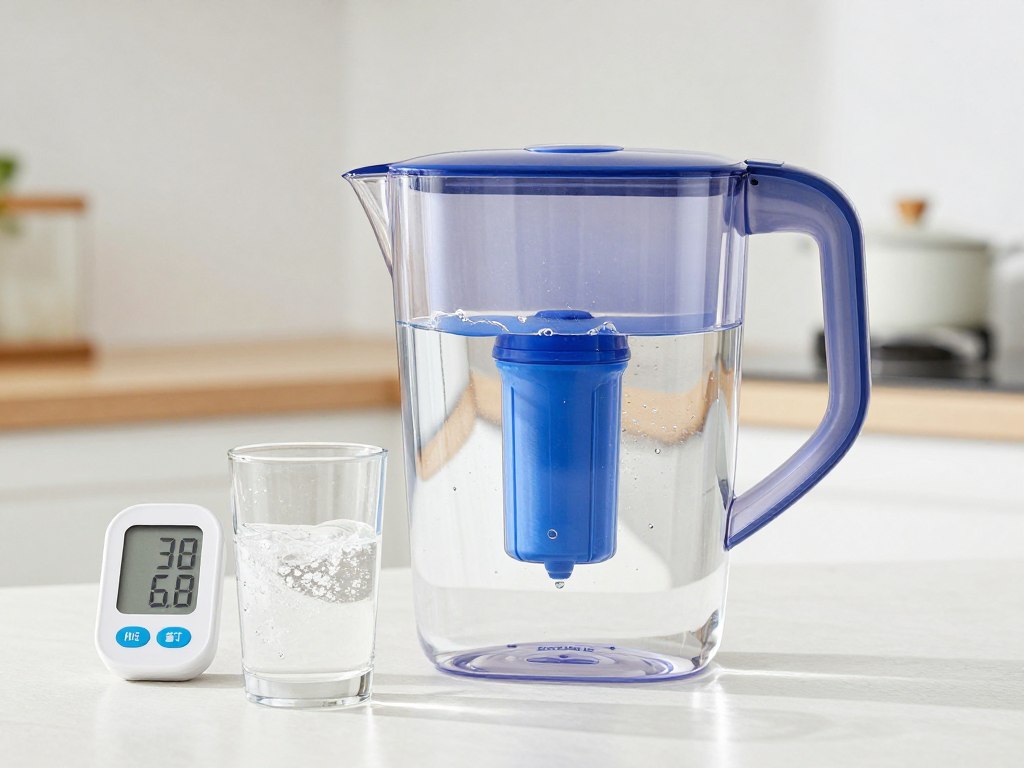
Pitcher filters serve a specific role in hurricane preparedness. They excel at treating pre-stored clean water from bathtub bladders or sealed containers. ZeroWater’s five-stage filtration removes dissolved solids that other systems miss.
When Pitcher Filters Make Sense
You filled your WaterBOB before the storm. Municipal water was safe when you stored it. Now you want to remove the chlorine taste and any particles that settled during storage. Pour-through pitchers handle this perfectly.
ZeroWater reduces total dissolved solids to near zero. The included TDS meter proves it. This removes minerals, salts, and dissolved metals. Water tastes exceptionally clean. The five-stage filtration catches particles down to sub-micron sizes.
Hurricane Application Limitations
Pitcher filters work only with already-safe water sources. They cannot purify contaminated floodwater or severely compromised municipal supplies. Think of them as refinement tools, not emergency purification systems.
Filter capacity is limited. ZeroWater cartridges handle 25-40 gallons depending on source water quality. High TDS water from wells or mineral-heavy sources exhausts filters faster. Budget for multiple replacement filters if using this as your primary system.
Advantages
- Excellent for treating pre-stored bathtub water
- Removes dissolved solids other filters miss
- Very easy to use – just pour and wait
- Includes TDS meter to verify water quality
- Improves taste significantly
- Affordable initial investment under $50
- Fits in refrigerator for cold filtered water
Limitations
- Not suitable for contaminated or untreated water sources
- Low filter capacity 25-40 gallons requires frequent replacement
- Slow filtration rate compared to other systems
- Replacement filters cost $15-20 each adds up quickly
- Cannot remove biological contaminants reliably
- Small pitcher capacity requires frequent refilling
Recommended Hurricane Use Cases
Keep a ZeroWater pitcher as a secondary system. Use it to treat bathtub-stored water for drinking. The improved taste encourages family members, especially children, to stay hydrated during stressful recovery periods.
Combine it with a primary filtration system. Use Sawyer Squeeze or gravity filters for emergency sources. Use the pitcher for final treatment of already-filtered water. This two-stage approach provides maximum safety and best taste.
ZeroWater Pitcher Details
Pitcher Capacity: 10 cups (2.5 quarts)
Filter Capacity: 25-40 gallons before replacement
Filtration Stages: Five-stage system (activated carbon, oxidation-reduction, ion exchange)
Removes: 99% of dissolved solids, chromium, lead, mercury, chlorine
Filtration Time: 8-10 minutes per pitcher fill
Includes: Pitcher, one filter, TDS water quality meter
Stock at least three replacement filters per family member for hurricane season. This ensures adequate capacity for several weeks of water treatment from stored sources.
WaterBOB Emergency Bathtub Water Storage System
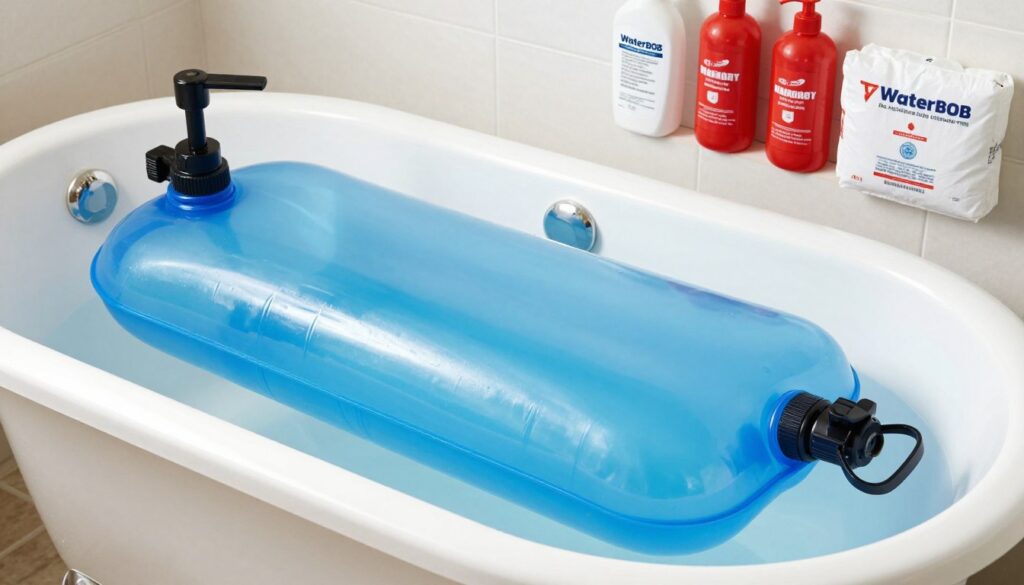
The WaterBOB isn’t a filter. It’s the most critical water storage tool for hurricane preparedness. This food-grade plastic liner transforms your bathtub into a sealed 100-gallon water reservoir. Fill it before the storm hits. Access clean municipal water for weeks after infrastructure fails.
Why WaterBOB Is Essential Hurricane Gear
Municipal water systems issue boil-water advisories after contamination occurs. By then it’s too late to store safe water. The WaterBOB lets you capture clean water while it’s still flowing from taps. Fill it when hurricane warnings are issued, typically 24-48 hours before landfall.
Bathtubs hold water, but bare tub surfaces contaminate it. Soap residue, bacteria from previous baths, and porous surfaces all compromise stored water. The WaterBOB creates a sealed barrier. Water stays clean and drinkable for weeks.
Setup and Usage
Place the collapsed bladder in your bathtub. Attach the fill sock to your faucet. Turn on cold water. The bladder fills in 20-30 minutes. Remove the fill sock. The integrated siphon pump lets you extract water without opening the bladder.
One hundred gallons supplies a family of four for about three days of drinking, cooking, and basic hygiene. That covers the critical period when bottled water distribution hasn’t started yet. Municipal water may remain unsafe for weeks, but this initial supply prevents dehydration emergencies.
Integration with Filtration Systems
WaterBOB water is clean when you store it. It doesn’t need filtration immediately. After several days, add filtration for extra safety. Any of the systems reviewed above work perfectly with WaterBOB-stored water.
Use Sawyer Squeeze to fill drinking bottles. Set up Waterdrop gravity system for cooking water. Run it through ZeroWater pitcher for best taste. The combination of clean storage plus filtration provides maximum safety and peace of mind.
WaterBOB Specifications
Capacity: 100 gallons (400 liters)
Material: BPA-free, food-grade plastic liner
Dimensions: Fits standard 60-inch bathtubs
Fill Time: 20-30 minutes at normal water pressure
Storage Duration: Up to 16 weeks when properly sealed
Includes: Bladder liner, fill sock, siphon pump
Reusable: Can be cleaned and reused (check for damage after each use)
Critical Usage Tips
- Fill when hurricane watch is issued (don’t wait for warnings)
- Use cold water only (hot water can degrade plastic faster)
- Clean bathtub thoroughly before installation
- Remove drain stopper or use mesh screen to prevent bladder damage
- Keep bathroom door closed to minimize contamination risk
- Mark water level daily to monitor any leaks
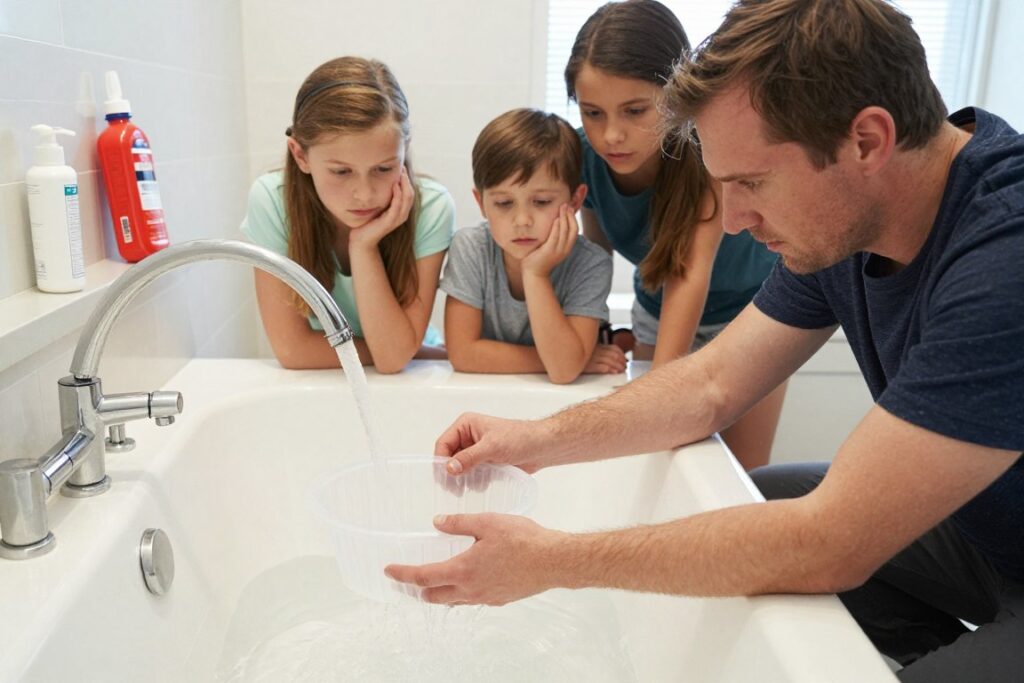
Most Gulf Coast families should own at least one WaterBOB per bathroom. The twenty-five-dollar investment provides more emergency water than you can reasonably store in bottles. Combine it with quality water filtration for complete hurricane water security.
How Much Water to Store Per Person — FEMA Guidelines
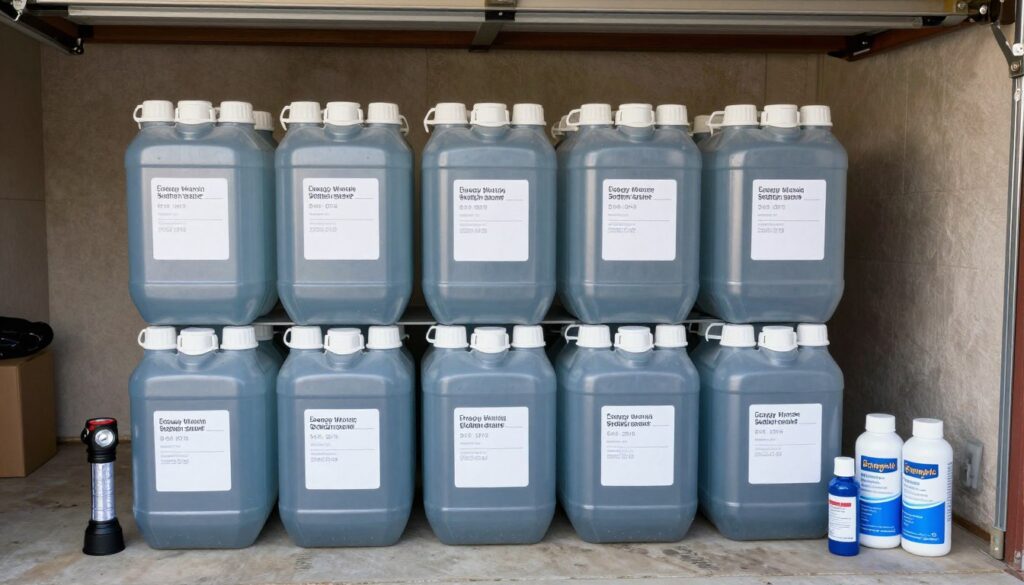
FEMA recommends one gallon of water per person per day for drinking and sanitation. That’s a minimum. Gulf Coast hurricanes often disrupt water supplies for two weeks or longer. Understanding realistic water needs prevents dangerous shortages.
Breaking Down Daily Water Requirements
Drinking alone requires half to three-quarters of a gallon daily depending on heat, activity level, and individual health. Cooking adds another quart. Food preparation and dish washing use additional water. Basic hygiene including hand washing and teeth brushing requires more.
One gallon per person barely covers essentials. It doesn’t include bathing, laundry, or toilet flushing. Plan for 1.5 to 2 gallons per person daily for more comfortable and sanitary conditions during extended outages.
Storage Calculations for Families
A family of four needs minimum 12 gallons for three days (FEMA baseline). For two weeks, that rises to 56 gallons minimum or 112 gallons for adequate comfort. The WaterBOB provides 100 gallons. Add case water and you reach reasonable coverage.
Don’t forget pets. Dogs need approximately one ounce of water per pound of body weight daily. A fifty-pound dog requires more than three quarts. Cats need less but still require clean water. Include pet water in your storage calculations.
Minimum FEMA Standard
- 1 person: 3 gallons (3 days) / 14 gallons (2 weeks)
- 2 people: 6 gallons (3 days) / 28 gallons (2 weeks)
- 4 people: 12 gallons (3 days) / 56 gallons (2 weeks)
- Add 1 gallon per pet per day
Realistic Comfort Level
- 1 person: 5 gallons (3 days) / 21 gallons (2 weeks)
- 2 people: 10 gallons (3 days) / 42 gallons (2 weeks)
- 4 people: 20 gallons (3 days) / 84 gallons (2 weeks)
- Add 2 gallons per pet per day for comfort
Storage Methods and Container Safety
Store water in food-grade containers only. Commercial bottled water is safest. Five-gallon water cooler bottles work well. Sanitize any reused containers with bleach solution before filling.
Never use milk jugs or containers that held non-food substances. Plastic degrades. Chemical residues leach into stored water. Glass containers can break during hurricanes. Stick with purpose-built water storage or new food-grade plastic.
Rotate stored water every six months. Municipal water contains chlorine that prevents bacterial growth. After months of storage, chlorine dissipates. Refresh your supplies before hurricane season starts. Use old stored water for plants or washing.
Additional Water Sources to Consider
- Water heater tank: 30-80 gallons of clean water (drain from bottom valve)
- Toilet tank (not bowl): 2-3 gallons per toilet (only if no chemical treatments)
- Ice in freezers: Melts to drinking water (filter for quality)
- Swimming pools: Thousands of gallons (requires purification-level filtration)
- Neighbor cooperation: Shared water sources during emergencies
Combining storage with filtration capability creates flexible water security. Store what you can. Filter what you need. This dual approach handles various hurricane scenarios from brief outages to month-long infrastructure failures.
Building Your Complete Hurricane Water Preparedness System
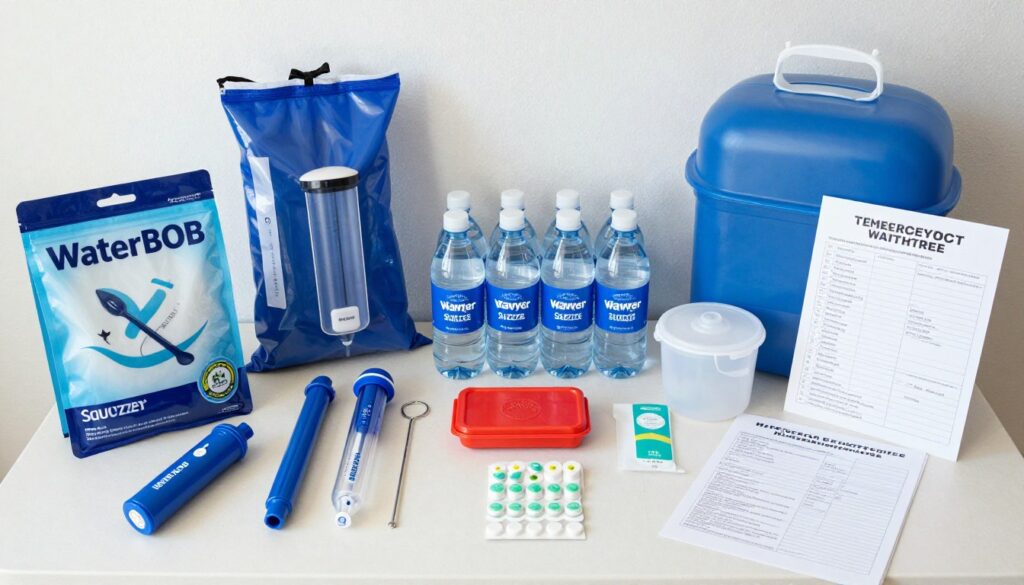
Effective hurricane water preparedness combines storage, filtration, and backup systems. No single solution covers all scenarios. Layered approaches provide redundancy when primary systems fail or run out of capacity.
Three-Tier Water Security Strategy
Tier 1 – Pre-Storm Storage (Days 1-5): Fill WaterBOB bathtub bladder 24-48 hours before hurricane arrival. Purchase two cases of bottled water per person. Fill every available container with tap water before municipal systems fail. This clean stored water gets you through the immediate aftermath when stores are closed and distribution hasn’t started.
Tier 2 – Active Filtration (Days 5-14): Deploy portable filters like Sawyer Squeeze for treating stored bathtub water, rainwater collection, or emergency municipal supply during boil-water advisories. Gravity systems filter larger quantities for cooking and food preparation. This phase handles the period when stored water runs low but municipal service remains compromised.
Tier 3 – Extended Recovery (Week 3+): Countertop purification systems provide long-term water security during extended infrastructure failure. Rainwater collection with proper filtration becomes sustainable. Community water distribution supplies raw water that you purify at home. This tier addresses scenarios where recovery takes months.
Budget-Friendly Starter Package
Families on limited budgets should prioritize these essentials totaling under $150:
- One WaterBOB bathtub bladder ($25-35)
- One Sawyer Squeeze filter system ($35-45)
- Two cases of bottled water ($10-15)
- Four 5-gallon water containers ($40-60)
- Purification tablets as backup ($10-15)
This combination provides 100+ gallons of storage plus filtration for emergency sources. It covers a family of four for two weeks with careful rationing. Expand it over time with additional filters and gravity systems.
Premium Comprehensive System
Families investing in maximum protection should consider this $500-600 package:
- Two WaterBOB systems for multiple bathrooms ($50-70)
- ProPur countertop gravity filter for primary use ($250-350)
- Sawyer Squeeze for portable backup ($35-45)
- Waterdrop gravity bag for high-volume needs ($65-80)
- Four LifeStraw personal units for individual backup ($60-80)
- ZeroWater pitcher for taste improvement ($35-50)
- Six 5-gallon storage containers ($60-90)
- Purification tablets and testing supplies ($20-30)
This system handles any scenario from brief outages to complete infrastructure collapse. Multiple filtration methods provide redundancy. Storage capacity supports extended self-sufficiency.
Critical Timeline: Purchase and set up water filtration equipment before hurricane season begins in June. When tropical storms form, stores sell out within hours. Shipping delays prevent last-minute ordering. Prepare in April or May when supplies are available and prices remain normal.
Essential Hurricane Preparedness Resources for Gulf Coast Residents
Water security is one component of comprehensive hurricane readiness. These related resources help you prepare for all aspects of storm survival and recovery.
Hurricane Prep for Renters
Apartment and rental home residents face unique challenges. You can’t install generators or major equipment. This guide shows how to prepare effectively without permanent installations or landlord permission.
Learn about portable power solutions, water storage in limited space, and evacuation planning when you don’t own the property. Essential reading for Gulf Coast renters.
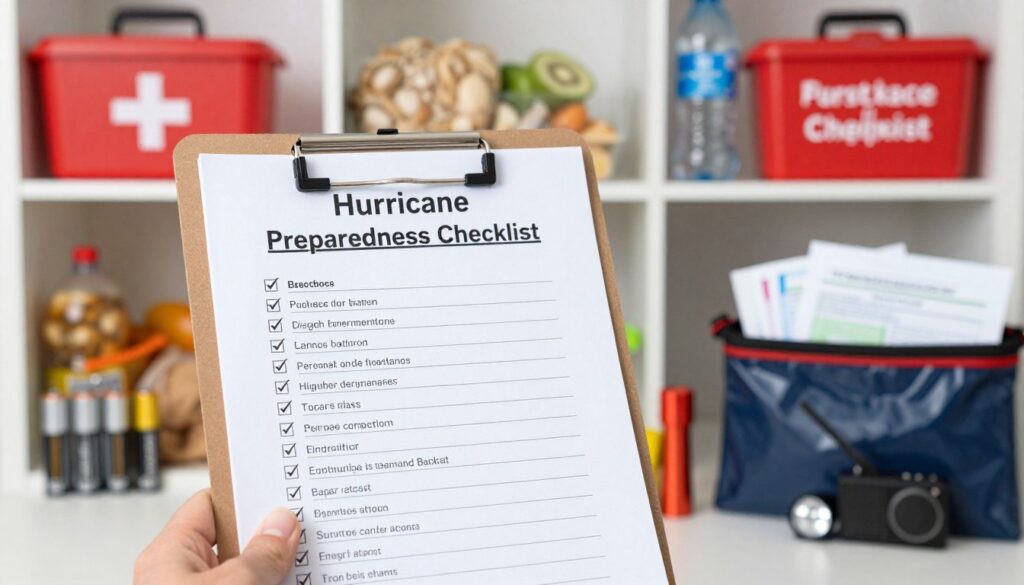
Complete 2026 Hurricane Preparedness Checklist
Don’t leave hurricane readiness to memory. This comprehensive checklist covers everything from home fortification to evacuation planning. Print it. Check off items as you prepare.
Updated for 2026 with current recommendations on supplies, shelter locations, and communication plans. Free downloadable PDF version available.
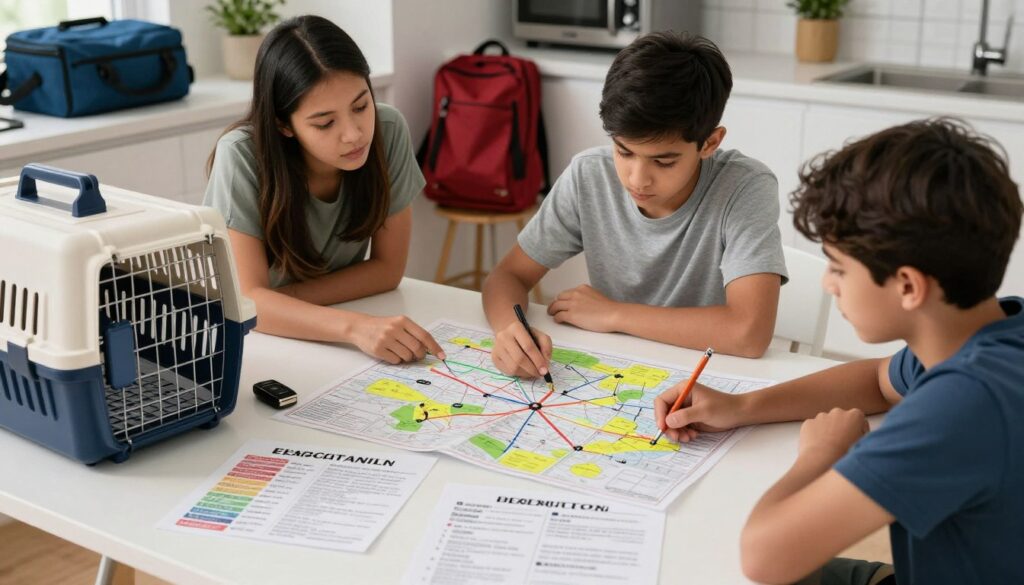
Family Hurricane Evacuation Planning
Knowing when and how to evacuate saves lives. This guide helps families create detailed evacuation plans including routes, destinations, and communication protocols.
Special sections address evacuating with pets, elderly family members, and essential medical equipment. Practice your plan before hurricane season starts.
Frequently Asked Questions About Hurricane Water Filtration
Is tap water safe after a hurricane hits the Gulf Coast?
Tap water is frequently unsafe after hurricanes. Storm surge and flooding overwhelm sewage systems, causing bacterial contamination of municipal water supplies. Infrastructure damage interrupts chemical treatment. Power outages stop pumping stations. Most coastal communities issue boil-water advisories lasting one to three weeks after major hurricanes.
Even after advisories lift, many residents report discolored water, strange odors, or continued quality issues for months. The safest approach assumes tap water is compromised until you can verify safety through testing or official all-clear notifications. Having filtration capability removes this uncertainty.
What is the best water filter for hurricane season in Florida and the Gulf Coast?
The Sawyer Squeeze earns our top recommendation as the best water filter for hurricane season. It offers exceptional versatility, filtering 100,000 gallons of water through a compact 2-ounce unit. The system removes 99.99999% of bacteria and 99.9999% of protozoa, addressing the primary contamination concerns after hurricanes.
For families wanting comprehensive protection, add a gravity filtration system like Waterdrop or ProPur countertop filter. This combination handles both immediate emergency needs and long-term recovery scenarios. Budget-conscious households get excellent protection with Sawyer Squeeze alone paired with a WaterBOB for storage.
How do you filter water after hurricane flooding contaminates local supplies?
First, use the cleanest source available. Pre-stored bathtub water needs minimal filtration. Rainwater requires basic filtration for particles and bacteria. Standing floodwater needs purification-level treatment including pre-filtering, fine filtration, and ideally chemical treatment or boiling as backup.
For bathtub-stored water, any quality filter suffices. Run it through Sawyer Squeeze, gravity filters, or even pitcher filters. For emergency sources like rain or compromised municipal water, use hollow-fiber membrane filters rated 0.1 micron or finer. For severely contaminated sources, combine filtration with purification tablets or boiling when possible.
Always pre-filter extremely muddy or debris-filled water through cloth or coffee filters first. This extends filter life and maintains flow rate through primary filtration systems.
Do I need a water purifier or just a water filter for hurricane preparedness?
For most hurricane scenarios, quality water filters provide adequate protection. They remove bacteria from sewage contamination and parasites from standing water. Combined with pre-storm storage of clean municipal water, filters handle typical Gulf Coast hurricane situations.
Purifiers become essential when filtering severely contaminated floodwater, sources with viral contamination, or water with chemical pollutants from industrial areas. Countertop gravity systems like ProPur offer purification-level protection. Portable filters can be supplemented with purification tablets for backup viral and chemical treatment.
The safest approach combines both. Use filters for routine treatment of stored and rainwater. Keep purification capability available for worst-case scenarios involving heavily contaminated sources.
How much water should I store for my family before a hurricane?
FEMA recommends minimum one gallon per person per day. For a family of four, that’s 12 gallons for three days or 56 gallons for two weeks. Realistic comfort levels increase this to 1.5-2 gallons per person daily, meaning 84-112 gallons for two weeks for a family of four.
The WaterBOB bathtub bladder provides 100 gallons when filled before the storm. Add 2-4 cases of bottled water (6-12 gallons) plus whatever you can store in sanitized 5-gallon containers. This combination typically covers two weeks for most families when supplemented with filtration capability for emergency sources.
Don’t forget pets. Add one gallon per day per pet to your calculations. Larger dogs require more. Account for everyone in your household including elderly relatives who might shelter with you.
Can I drink swimming pool water if I filter it during a hurricane emergency?
Chlorinated pool water can be filtered for emergency consumption, but it should be a last resort. Pool chemicals include stabilizers, algaecides, and pH adjusters not intended for drinking. Even after filtration, water may contain residual chemicals.
If you must use pool water, employ multi-stage filtration with activated carbon to remove chemical additives. Expect unpleasant taste even after treatment. Reserve pool water primarily for washing, sanitation, and toilet flushing when possible. Drink it only when absolutely no other water sources exist.
Children, pregnant women, and immunocompromised individuals should avoid pool water consumption even after filtering. Prioritize stored water, rainwater, or municipal supply first.
When should I fill my WaterBOB bathtub bladder before a hurricane?
Fill your WaterBOB when hurricane watches are issued for your area, typically 24-48 hours before expected landfall. Don’t wait for hurricane warnings. By that time, municipal water systems may already experience pressure problems or contamination from pre-storm flooding.
Once filled, the WaterBOB stores clean water for up to 16 weeks when properly sealed. If the hurricane misses your area or causes minimal damage, you can drain it and save the bladder for future use. The small time investment of filling it early provides massive insurance against water emergencies.
Some coastal residents fill WaterBOBs at the start of hurricane season and maintain them throughout June-November. This eliminates last-minute preparation stress when specific storms threaten.
What filtration system works without electricity during power outages?
All the systems recommended in this guide operate without electricity. Sawyer Squeeze uses manual squeezing. Gravity filters like Waterdrop and ProPur use gravity flow only. LifeStraw requires simple suction. ZeroWater pitcher uses gravity. None need batteries or power.
This makes them ideal for hurricane situations where power outages last weeks. You maintain water purification capability regardless of electrical grid status. Even if you have generator power, saving fuel for essential needs like refrigeration makes more sense than running electric water treatment.
Take Action Before the Next Hurricane Season
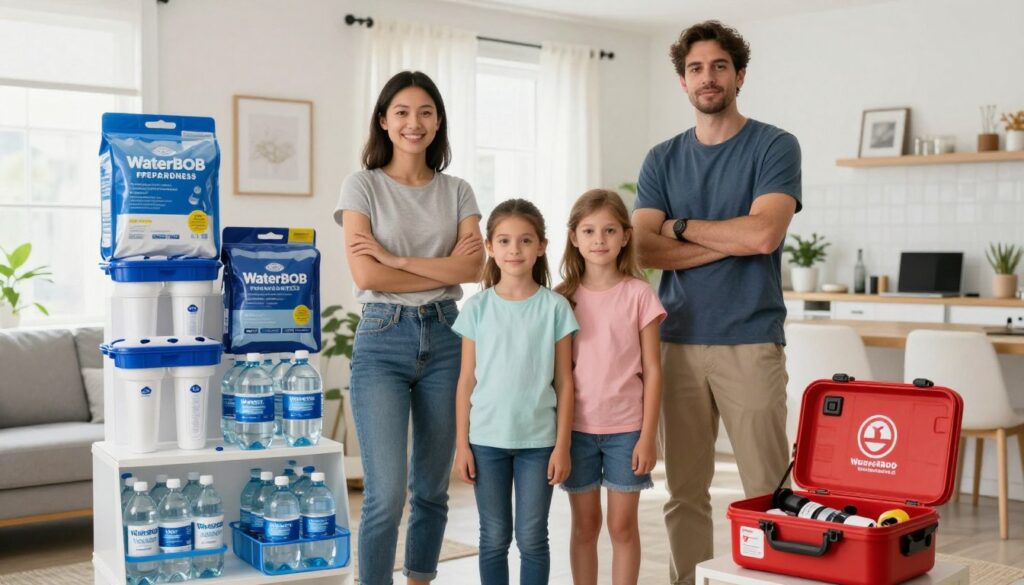
Hurricane Idalia taught Gulf Coast residents hard lessons about water security. Families who prepared had clean drinking water within hours. Those who waited stood in distribution lines for days or paid premium prices for remaining bottled water. The difference was simple preparation completed before the storm arrived.
Water filtration systems aren’t expensive luxuries. They’re essential hurricane preparedness equipment. The Sawyer Squeeze costs less than dinner for four. It provides water security for years. WaterBOB storage runs twenty-five dollars. Together they supply clean water for weeks when municipal systems fail.
Your Hurricane Water Action Plan
Start with storage capability. Purchase one WaterBOB per bathroom in your home. Add basic filtration with Sawyer Squeeze or similar portable system. Stock two cases of bottled water per family member. This foundation covers most hurricane scenarios for under $150.
Expand based on your family’s specific needs. Immunocompromised members justify countertop purification systems. Large families benefit from gravity bag filters for high-volume needs. Multiple backup systems provide peace of mind during extended outages.
Don’t wait until tropical storms form. Prices spike and supplies disappear when hurricanes threaten. Make these purchases during spring when inventory is full and costs remain normal. Test your equipment before you need it. Familiarize everyone with operation and maintenance.
Don’t Wait Until the Storm Hits
Hurricane season starts June 1st. Stores sell out when storms form. Shipping delays prevent last-minute orders. Protect your family now with proven water filtration systems. These three options cover different budgets and family sizes.
The next hurricane will come. Whether it disrupts your water supply for days or weeks depends partly on the storm’s severity. But your family’s water security depends entirely on decisions you make today. Pre-storm preparation determines post-storm outcomes.
Clean water isn’t a convenience during hurricane recovery. It’s survival. It’s preventing illness when hospitals overflow. It’s maintaining sanitation when sewage systems fail. It’s keeping your family healthy during the most stressful situations you’ll face.
Investment in quality water filtration pays dividends beyond hurricane preparedness. Use these systems for camping, travel, and everyday drinking water. The Sawyer Squeeze that protects your family after hurricanes also provides safe water on beach camping trips. ProPur systems improve daily drinking water quality while standing ready for emergencies.
“After Hurricane Michael, we had clean water when our neighbors were boiling everything. The Sawyer Squeeze we bought for camping saved us during three weeks without safe tap water. Best forty dollars we ever spent.”
Gulf Coast living brings incredible benefits. Beaches, seafood, warm weather, and tight communities make coastal life special. Hurricanes are part of the bargain. Preparing for them doesn’t mean living in fear. It means enjoying coastal life with confidence that you can handle whatever storms bring.
Start building your water security system today. Your future self, standing in a powerless home days after the next major hurricane, will thank you for the preparation you complete right now.